Showing posts with label Iran. Show all posts

Wednesday, 13 August 2014

Iran ready to revive Nabucco pipeline project and supply gas to Europe

Iran ready to revive Nabucco pipeline project and supply gas to Europe
Iran’s Deputy Oil Minister for International Affairs has said that Iran is ready to supply Europe with gas via the previously aborted Nabucco pipeline, adding that two European countries have already shown interest.

Speaking to the Islamic Republic News Agency (IRNA) on 11 August, Deputy Oil Minister for International Affairs, Ali Majedi, said that, with its major gas fields, Iran could supply gas to Europe via Nabucco and that the abortive gas pipeline project was useless without Iran.

As the international community considers lifting the sanctions against Iran, corporations and governments are strategically positioning themselves to take advantage of Iranian trade possibilities. Delegations from two European countries have already visited Iran this summer to discuss possible routes for gas deliveries, Majedi revealed without naming the countries. He continued that different routes were possible, including supplies via Turkey, Iraq, Syria, Caucasia and the Black Sea, adding that he saw the Turkish route as the most viable option.

The deputy minister said gas from the Shah Deniz gas field in the Caspian Sea would not be solely sufficient for the pipeline, as production at Shah Deniz would not exceed eight billion cubic meters a year, while the designed capacity of the pipeline is at least 23 billion cubic meters, therefore necessitating the need for Iranian involvement. 

Nabucco is an abortive project of a 3,300-kilometer-long gas pipeline from Turkmenistan and Azerbaijan to Germany and Austria and on to the rest of the EU. The project was estimated at €7.9 billion, although in 2012 it was estimated that the project may cost less. OMV Gas GmbH (Austria), BOTAS (Turkey), Bulgargaz (Bulgaria) and Transgaz (Romania) were parts in the consortium for pipeline construction.

Work on the project began in 2002. Initially, plans were to launch the construction in 2011, finishing it by 2014, but the project was repeatedly postponed because of problems with possible gas suppliers. In 2011, it was reported that the launch date was shifted to late 2018. In June 2013, an announcement came that the project had been closed in favour of a more promising project - the Trans-Adriatic pipeline.

For more news and expert analysis about Iran, please see Iran Strategic Focus.

© 2014 Menas Associates

Tuesday, 12 August 2014

Dana Gas: Favourable ruling in Iran and Crescent Petroleum Tribunal

Dana Gas: Favourable ruling in Iran and Crescent Petroleum Tribunal
UAE-based energy firm Dana Gas has released a statement that an international tribunal has issued a favourable ruling in the dispute over a natural gas supply contract between Iran and Dana’s largest private shareholder, Crescent Petroleum.

The tribunal ruled that a 25-year contract for National Iranian Oil Co (NIOC) to supply gas to Crescent was valid and legally binding, and that NIOC had been obligated to deliver gas since December 2005, Dana said on 9 August.

NIOC and Crescent signed the 25-year contract in 2001, with the price tied to oil. Deliveries were delayed, however, as oil prices rose and some Iranian officials and politicians called for a revision to the gas pricing formula.

Crescent Petroleum initiated arbitration proceedings in July 2009; a three-person arbitration tribunal was formed under the terms of the 2001 contract.

According to Dana, NIOC first introduced gas into its transmission network and Dana’s UAE processing facilities for commissioning purposes in July 2010. The system had to be shut down again, however, when leaks were discovered in the transmission system.

Dana did not state when it expected gas supplies to start flowing again, but a source familiar with the matter said that supplies would not begin in the near term as subsidiary agreements needed to be reached and infrastructure work completed.

The contract provides for the UAE to import some 600 million cubic feet of Iranian gas per day, although the actual amount will depend on many factors and may only become clear in coming months. The UAE is eager to obtain additional natural gas supplies to support its rapid economic growth.

In the last few years, international financial sanctions imposed by the US and Europe over Tehran’s disputed nuclear programme have restricted trade between the UAE and Iran. Dana did not say whether the sanctions might complicate efforts to implement the gas supply contract.

For more news and expert analysis about Iran, please see Iran Strategic Focus.

© 2014 Menas Associates

Friday, 18 July 2014

Short extension to Iran nuclear talks proposed as deadline looms

Short extension to nuclear talks proposed as deadline looms

Iran and the P5+1 have been engaged in very intense negotiations since 2 July in a bid to achieve a comprehensive nuclear deal before the 20 July deadline. Though the deadline can be extended by up to six months, all parties involved are interested in finalising the deal soon.

The two sides agree that significant gaps remain, mainly on the issue of enrichment capacity. This translates into the number of centrifuges, production capacity, and stockpiles of enriched uranium. Various formulae could achieve the Western goal of prohibiting the breakout capability of the Iranian programme, defined as the point at which there is a sufficient quantity of highly enriched uranium to fuel a weapon.

Iran’s latest offer has included a freeze on enrichment to maintain the current capacity of about 9,000 centrifuges instead of reducing that now and allowing it to grow in the future. This suggestion is now being considered in Washington, but insiders there told Menas Associates that 9,000 spinning centrifuges would not offer enough leverage to President Obama to push back congressional pressure against sanctions relief.

It looks very likely that the two sides will agree on an extension of the talks by a few weeks, not by six months. That would allow them to close the gap between their positions, but there is also another important advantage: the US Congress will be on its summer break in August and if the comprehensive agreement is signed in mid-month, there will be no immediate congressional opposition.

Washington and Tehran have achieved their core objectives and are now attempting to make the deal more attractive to their domestic stakeholders. At the same time, each knows that it will be easy for the other to undo the progress made so far and return to the escalatory mode of the past few years.

A deal is thus likely in August and will then be implemented over the next two years, ultimately leading to a working relationship between Tehran and Washington and an improvement of ties between Iran and the European Union.

For more news and expert analysis about Iran, please see Iran Strategic Focus.

© 2014 Menas Associates

Thursday, 26 June 2014

Iran: Boosting output at joint fields

Iran is planning to boost output at oil fields shared with neighbouring countries. An Iranian lawmaker said on 4 June that the Ministry of Petroleum has terminated contracts to develop domestic oil fields as part of a major plan to prioritise investment in joint fields.

Seyed Saeed Heidari, a member of the Majles Energy Commission, said Minister of Petroleum Bijan Namdar Zanganeh had issued an order to stop the development of domestic oil fields except for those that have already reached production and indicated that the Ministry will pay compensation for rescinded contracts.

‘Our neighbouring countries are extracting more than Iran in many shared oil and gas fields,’ Heidari explained. ‘We are markedly lagging behind.’

For more news and expert analysis about Iran, please see Iran Strategic Focus.

© 2014 Menas Associates

Thursday, 20 March 2014

Iran unveils contract model


The Ministry of Petroleum unveiled the draft model of its new oil and gas contracts, which is aimed at drawing more foreign companies to the Iranian hydrocarbon sector. The Iran Petroleum Contract (IPC) was announced in Tehran by Mehdi Hosseini, who heads a ministry-appointed committee to revise oil contracts.

‘In the new contracts, different stages of the petroleum industry (exploration, development, and production) are commissioned in an integrated manner,’ Hosseini told a forum organised to introduce the contracts.

The IPC is replacing buy-back contracts, which are no longer attractive to foreign companies. Under a buyback deal, the host government agrees to pay the contractor an agreed price for all volumes of hydrocarbons the contractor produces.

Under the IPC, the National Iranian Oil Company will form joint ventures in crude and gas production with international companies to manage projects, provide financing, and maximise hydrocarbon recovery, Hosseini said.

The official emphasised that the new contracts will offer higher fees for riskier exploration and production projects but that ‘ownership of reservoirs is not transferrable. Under new contracts, Iranian experts will work shoulder to shoulder with foreign investment companies in order to become familiar with the latest technologies of the world.’

The new contracts are also intended to raise the recovery factor of Iranian oil fields, half of which are in their maturity period. Iran needs US$150 billion of investments in its upstream oil and gas industry in the next five years, and the share of foreign investment in the contracts therefore had to increase.

Iran expects to attract US$100 billion in investment in its energy sector over the next four years after the new model takes effect.

For more news and expert analysis about Iran, please see Iran Strategic Focus.

© 2014 Menas Associates

Thursday, 13 March 2014

Yemen: Saudis put al-Huthi on list of terrorist organisations


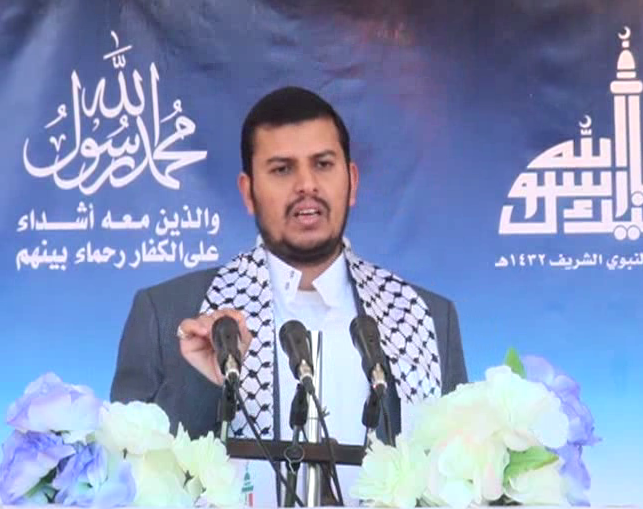
Saudi Arabia issued a list of terrorist organisations on 6 March which includes the obvious suspects such as Al-Qa’ida in the Arabian Peninsula but also al-Huthi and the Muslim Brotherhood (MB). The Saudis have made clear that the banning of the MB is not directed at Islah, even though it is well known that the MB is part of that party. The naming of al-Huthi follows the approval of a new law on terrorism under which a special committee was set up to designate terrorist groups.

Riyadh has long regarded al-Huthi as hostile and fought al-Huthi fighters in 2009 and 2010. However, in the past three years the border has been quiet and both sides have avoided provocations. The Saudis have little doubt that al-Huthi is supported by Iran and the Lebanese Hizbollah and thus regarded as hostile. Riyadh will have been disturbed by the rapid rise in al- Huthi power in Yemen and the challenge this poses to some of Saudi Arabia’s traditional friends in the non-MB part of Islah. It is not clear if the al-Huthi political party, Ansar Allah, is affected.

Abd al-Malik al-Huthi blames the US, as usual, for the Saudi action, which he presented as taken precipitately and suggested that the Saudis might want to reconsider the situation. 

Saudi Arabia suspended its economic support to Yemen in late 2013, claiming that it wanted to encourage the politicians to agree on a way forward. The Saudi expulsion of Yemeni illegal migrants (within a general crackdown on illegals) has inflamed anti-Saudi opinion in Yemen.

Whether the Saudis have the will and capacity to turn the banning of al-Huthi into action against the movement in Yemen is moot.

Some Yemeni politicians are concerned about the rift within the GCC between Saudi Arabia and the UAE on one hand and Qatar on the other, mostly over Qatar’s backing for the MB. Qatar played a leading role in attempts in the late 2000s to mediate between the government and al-Huthi leaders and is the main financier, so far, of the fund to address southern grievances.

For more news and expert analysis about Yemen, please see Yemen Focus.

© 2014 Menas Associates

Thursday, 13 February 2014

Yemen: A plague of kidnappings


On 10 January, Al-Qa’ida in the Arabian Peninsula released Yolande Korkie, a South African it had held since May 2013, but only to facilitate demands for a ransom of $3 million for her husband, Pierre. Both are teachers working with a South African charity, Gift for Givers Foundation, which had been in touch with the kidnappers for some time to try to arrange their release.

Korkie explained that they had failed to persuade the kidnappers that their families were too poor to pay such a sum. AQAP suggested they ask Qatar or another government to intervene, perhaps hoping for a repeat of the part played by Oman in arranging freedom for two Finns and an Austrian last year (for what was said to be a very large ransom).

Gift of the Givers was given three weeks to come up with the money but said in early February that it had lost contact with the kidnappers shortly before the deadline expired, though it later received assurances that Pierre was alive and would not be executed. The couple had been in Yemen for four years and must have been aware of the risks they were running.

The UN Security Council has again called in governments and other organisations not to agree to ransom demands from kidnappers as the money is used to finance terrorism and encourages the further use of this form of extortion.

A German in his 60s studying Arabic was taken in central Sana’a on 31 January but apparently by tribesmen from Marib in dispute with the government. He should eventually be released unless the kidnappers sell him on to AQAP. A British oil worker was kidnapped on 3 February along with two Yemenis outside a supermarket at Hadda in Sana’a. Nothing is known of the motive, nor has there been any news.

An Iranian commercial attaché was killed in early January as he was leaving the residence of the Iranian ambassador in what appeared to be a bungled kidnap attempt. Another Iranian diplomat taken several months ago is still being held but the Tehran government says that he is in good health – contrary to reports that his body had been found in Marib. AQAP is also still holding the Saudi consul in Aden and there may be at least one other western hostage whose name (and even news of his kidnapping) has not been made public.

For more news and expert analysis about Yemen, please see Yemen Focus.

© 2014 Menas Associates

Friday, 23 August 2013

Iran to export gas to Iraq


Iran and Iraq have signed a high-profile agreement according to which Iran will supply 25 mcm/day of natural gas to the Al-Baghdad, Al-Mansouriyah, and Sadr power plants in Iraq.
 
The deal was signed by Petroleum Minister Rostam Qasemi and his Iraqi counterpart, Abdul Kareem Luaibi, in Baghdad. Iran will earn $3.7 billion a year from the deal.
 
In related news, the United States has announced that it is concerned about a $14.8 billion gas deal between Iran and Iraq and has asked Baghdad to explain it. The US State Department said that it plans to inform Baghdad about the implications with respect to sanctions.
 
In response, Mussab al-Mudaris, a spokesperson for the Iraqi Ministry of Electricity, emphasised that the natural gas supplies from Iran would help to ease electricity shortages by feeding two power plants in a Baghdad suburb.
 
For more news and expert analysis about Iran, please see Iran Strategic Focus.
 
© 2013 Menas Associates
 

Tuesday, 25 September 2012

Iran: Private sector exports first oil consignment


The Iranian private sector was reported in early September to have delivered the first consignment of crude oil via non-Iranian tankers to foreign buyers. Hassan Khosrojerdi, the head of the union of Iranian exporters of oil derivatives, said a private company had sold the consignment to an international client, emphasising that no discounts has been given over the trade.

The payment was used to settle Iran's debts. No cash was received from the client. And in mid-September some Iranian private-sector companies reached deals to sell two consignments, comprising four million barrels of oil, to international clients. The crude will be delivered in the Persian Gulf.

Khosrojerdi nevertheless complained that the Central Bank of Iran (CBI) is refusing to deliver on its promise to finalise the legal framework pertaining to private sector sales of crude. This development shows that Iran still has the ability to sell its oil, even under the current sanctions regime. Nevertheless, the volumes through such clandestine channels cannot be large, and it is not clear how long Iran will be able to maintain this strategy.

The US Treasury and related institutions in the United States are trying to close all loopholes through which Iran can funnel its crucial petrodollars home.

For more news and expert analysis about Iran, please see Iran Strategic Focus.

© 2012 Menas Associates

Tuesday, 20 September 2011

Iran, Russia oppose cross-border

Iran and Russia have both announced their opposition to a pipeline across the Caspian Sea, which was backed by the EU last week as a means to bring Caspian gas to Europe.

A trans-Caspian pipeline, running west from Turkmenistan to Azerbaijan along the Caspian seabed, has been under discussion for years, but has never got off the ground due to a lack of commercial imperative and political will. An ongoing dispute between Azerbaijan and Turkmenistan over their maritime border, and associated gas and oil fields, has also stymied progress.

On 13th September, however, the EU's Energy Commissioner Günther Oettinger announced that the EU was would start negotiating a legally binding treaty between Azerbaijan and Turkmenistan to build a trans-Caspian pipeline. Europe, said Oettinger, “is now speaking with one voice” – previous efforts to coordinate the 'Southern Corridor' to bring Caspian gas to Europe have been hamstrung by competing European agendas and approaches. The new mandate will empower it to arrange the legal and commercial requirements of a trans-Caspian system.

The pipeline would enable Turkmen gas to reach Europe without crossing Russian or Iranian soil. The EU is keen to reduce its energy dependence on Russia and avoid politically problematic Iran, whilst Turkmenistan is looking to diversify its energy export routes.

Tehran and Moscow have reacted angrily to the EU's intervention. Iran has stated that it opposes the project on ecological and legal grounds. Russia expressed its regret, and warned that the project did not account for “the actually existing international legal and geopolitical situation in the Caspian Basin today”.

The reference to geopolitics is significant, as it indicates the main reason for Russian and Iranian opposition (notwithstanding ecological protestations) – that a Caspian pipeline would enable Central Asian gas to avoid their territory, reducing their political and commercial leverage.

The other objection is that the legal status of the Caspian Sea, including the littoral states' maritime boundaries, is still unclear. Although most of the states have simply got on with developing gas and oil fields in their presumed sectors, the exact boundaries and the right of states to undertake major projects – like a subsea pipeline – is still legally unclear.

It is likely that Russia and Iran will apply a range of legal and political pressures to stop the pipeline from going ahead. The EU's internal problems and lack of focus towards the Caspian region may make it an unreliable patron for Azerbaijan and Turkmenistan, and unable to push the pipeline through against Russian and Iranian opposition.

Sources: Russian Ministry of Foreign Affairs, Reuters

For more news and expert analysis about Iran, please see Iran Strategic Focus.

Tuesday, 31 May 2011

Turkey-Iran finalise energy roadmap


Energy Minister Majid Namjoo announced on 3rd May at a joint press conference in Ankara with Turkish Energy Minister Taner Yildiz that Iran and Turkey have finalised an energy roadmap aimed at promoting investment and cooperation between the two neighbours. Namjoo stated that the agreement will have a "promising prospect" for Iran–Turkey energy transactions, boosting the two countries' electricity transmission capacity from "the current 500 MW to 1,000 MW."

According to analysts, Iran has several important reasons for seeking to increase its electricity cooperation with neighbouring countries. First, selling electricity instead of gas and crude oil will give Iran added value for its exports. Second, such exports allow Iran to maintain its energy balance as it exports gas and consumes electricity in the summer (when domestic gas demand is low), and exports electricity and consumes gas in the winter (when domestic electricity demand is low).

Lastly, by connecting its grid to neighbouring countries, Iran is making it more difficult for its energy sector to be placed under sanctions, as neighbouring countries would find it difficult to replace their reliance on Iran's electricity exports and would therefore resist or circumvent such measures by the international community.

For more news and expert analysis about Iran, please see Iran Strategic Focus.

© 2011 Menas Associates

Monday, 27 September 2010

Iran says “foreign enemies” responsible for virus attack on nuclear site


According to technology experts a virus identified as Stuxnet has infected approximately 60 per cent of computers within Iran. The head of Iran's Bushehr nuclear pant has said that the Stuxnet virus did not affect Iran's nuclear plant or government systems.

“A team is inspecting several computers to remove the malware. Major systems of the plant have not been damaged,” said Head of Bushehr plant Mahmoud Jafari.

Iran's Telecommunication's Minister Reza Taqipour said the virus did not “penetrate or cause serious damage to government systems”. The Iranian authorities were able to identify some 30,000 internet providers infected by the Stuxnet virus and blamed the country's “foreign enemies,” for creating it.

“The Stuxnet spy worm has been created in line with the West's electric warfare against Iran,” said the Secretary of Information Technology Council Mahmoud Liayi.

Source: The Independent

For more news and expert analysis about Iran, please see Iran Strategic Focus.

Tuesday, 7 September 2010

Iran's purchase of Azerbaijan gas to rise to 10 bcm


Tehran's Ambassador to Baku Mohammad Baqer Bahrami has said that upon completion of a new gas pipeline between Azerbaijan and Iran, the volume of gas purchased from Azerbaijani will rise to 10 bcm per year.

The two countries are currently in the process of signing a “long-term gas contract," and work is underway to expand the gas compressor station in Astara. Commenting on bilateral ties, Bahrami said that the Iran-Azerbaijan relations have entered a new phase.

"We want to buy five billion cubic meters of gas. In this direction, SOCAR implements the improvement of an existing pipeline," added Bahrami.

In March 2010, Chairman of the State Oil Company of the Azerbaijan Republic (SOCAR) Rovnag Abdullayev announced that Azerbaijan is ready to supply Iran with five bcm of natural gas per year once the infrastructures are set in place.

Source: Fars News Agency

For more news and expert analysis about the Caspian region, please see Caspian Focus.

For more news and expert analysis about Iran, please see Iran Strategic Focus.