Showing posts with label UAE. Show all posts

Tuesday, 12 August 2014

Dana Gas: Favourable ruling in Iran and Crescent Petroleum Tribunal

Dana Gas: Favourable ruling in Iran and Crescent Petroleum Tribunal
UAE-based energy firm Dana Gas has released a statement that an international tribunal has issued a favourable ruling in the dispute over a natural gas supply contract between Iran and Dana’s largest private shareholder, Crescent Petroleum.

The tribunal ruled that a 25-year contract for National Iranian Oil Co (NIOC) to supply gas to Crescent was valid and legally binding, and that NIOC had been obligated to deliver gas since December 2005, Dana said on 9 August.

NIOC and Crescent signed the 25-year contract in 2001, with the price tied to oil. Deliveries were delayed, however, as oil prices rose and some Iranian officials and politicians called for a revision to the gas pricing formula.

Crescent Petroleum initiated arbitration proceedings in July 2009; a three-person arbitration tribunal was formed under the terms of the 2001 contract.

According to Dana, NIOC first introduced gas into its transmission network and Dana’s UAE processing facilities for commissioning purposes in July 2010. The system had to be shut down again, however, when leaks were discovered in the transmission system.

Dana did not state when it expected gas supplies to start flowing again, but a source familiar with the matter said that supplies would not begin in the near term as subsidiary agreements needed to be reached and infrastructure work completed.

The contract provides for the UAE to import some 600 million cubic feet of Iranian gas per day, although the actual amount will depend on many factors and may only become clear in coming months. The UAE is eager to obtain additional natural gas supplies to support its rapid economic growth.

In the last few years, international financial sanctions imposed by the US and Europe over Tehran’s disputed nuclear programme have restricted trade between the UAE and Iran. Dana did not say whether the sanctions might complicate efforts to implement the gas supply contract.

For more news and expert analysis about Iran, please see Iran Strategic Focus.

© 2014 Menas Associates

Thursday, 13 March 2014

Yemen: Saudis put al-Huthi on list of terrorist organisations


Saudi Arabia issued a list of terrorist organisations on 6 March which includes the obvious suspects such as Al-Qa’ida in the Arabian Peninsula but also al-Huthi and the Muslim Brotherhood (MB). The Saudis have made clear that the banning of the MB is not directed at Islah, even though it is well known that the MB is part of that party. The naming of al-Huthi follows the approval of a new law on terrorism under which a special committee was set up to designate terrorist groups.

Riyadh has long regarded al-Huthi as hostile and fought al-Huthi fighters in 2009 and 2010. However, in the past three years the border has been quiet and both sides have avoided provocations. The Saudis have little doubt that al-Huthi is supported by Iran and the Lebanese Hizbollah and thus regarded as hostile. Riyadh will have been disturbed by the rapid rise in al- Huthi power in Yemen and the challenge this poses to some of Saudi Arabia’s traditional friends in the non-MB part of Islah. It is not clear if the al-Huthi political party, Ansar Allah, is affected.

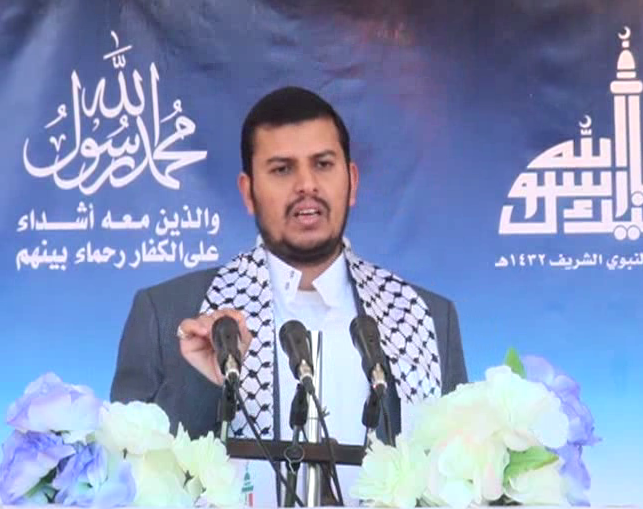
Abd al-Malik al-Huthi blames the US, as usual, for the Saudi action, which he presented as taken precipitately and suggested that the Saudis might want to reconsider the situation. 

Saudi Arabia suspended its economic support to Yemen in late 2013, claiming that it wanted to encourage the politicians to agree on a way forward. The Saudi expulsion of Yemeni illegal migrants (within a general crackdown on illegals) has inflamed anti-Saudi opinion in Yemen.

Whether the Saudis have the will and capacity to turn the banning of al-Huthi into action against the movement in Yemen is moot.

Some Yemeni politicians are concerned about the rift within the GCC between Saudi Arabia and the UAE on one hand and Qatar on the other, mostly over Qatar’s backing for the MB. Qatar played a leading role in attempts in the late 2000s to mediate between the government and al-Huthi leaders and is the main financier, so far, of the fund to address southern grievances.

For more news and expert analysis about Yemen, please see Yemen Focus.

© 2014 Menas Associates