Friday, 18 May 2012

US ready to attack Iran should other measures fail

According to Washington envoy to Israel Dan Shapiro, the US is ready to attack Iran should other measures fail to stop it developing nuclear weapons. Shapiro said the US hoped diplomacy and sanctions would convince Tehranto revise its nuclear programme, but a military option was in place and "ready".

US President Barack Obama has previously said military action was a possibility. The US and various other world powers are worried Tehran is developing a nuclear bomb, an accusation it denies. Talks between the Islamic Republic and six world powers are due to resume in Baghdad on 23 May.
The comments made by Shapiro, at the Israel Bar Association on Tuesday 15 April, were obtained by AP news agency.

Speaking about Tehran, Shapiro said: “It would be preferable to resolve this diplomatically through the use of pressure than to use military force. But that doesn't mean that option is not fully available. Not just available, but it's ready. The necessary planning has been done to ensure that it's ready."
On Thursday 17 April, Pentagon spokesman George Little stressed that Washington's policy on the issue "has not changed at all". He explained: "The ambassador's comments are perfectly in line with what we have been saying for a while with respect to Iran. Our focus in the US is on using diplomatic and economic instruments...to bring pressure to bear on the Iranians to do the right thing."

Furthermore, Little added that Shapiro "was absolutely correct to say that no options are off the table but those options are not something that are being contemplated at this time".

Both the US and Israel have said they consider military force a last resort to stop Iran using its uranium enrichment programme to make weapons. In March, Obama said there was "still a window that allows for a diplomatic resolution," which would be preferable as a strike on Iran would cause major problems in regional stability.

Sources: AP, BBC News, Bloomberg

For more news and expert analysis about Iran, please see Iran Strategic Focus.

Thursday, 17 May 2012

Nigeria: FG faces major cash squeeze – civil servants unpaid


The Federal Government appears to be facing a cash squeeze amid revelations it has not paid some civil servants their monthly wages and that the National Youth Service Corps (NYSC) members have been owed allowances since March. It has also been revealed that the monthly Federation Account Allocation Committee (FAAC) meeting has been stalled because there is no cash to disburse to the government tiers funded by the Federation Account.

FAAC meetings are held every month to determine the distribution of allocations from the proceeds to the Federation Account to the Federal, State and Local Governments. Minister for Youths Bolaji Abdullahi sought to explain the reason for the delay in the payment of federal civil staff wages and NYSC allowances by stating that it was due to some glitches in the salary payment software of the Federal Civil Service.

Sources have disclosed, however, that the cash crunch has been developing for some time because the government has been struggling with liquidity issues since November 2011. It has been revealed that December salaries, which are usually paid before the Christmas holiday, were not paid till the middle of January 2012.

It was also stated that some of the Federal Government's Ministries, Departments and Agencies were only able to pay March salaries in

April because they rely on warrants being cash-backed. Apparently, no employees have yet been paid their April salaries. It has also been disclosed that the FAAC allocations for March were only settled in part and that, in some cases, only about 30% of what was owned was paid.

For more news and expert analysis about Nigeria, please see Nigeria Focus and Nigeria Politics & Security.

© 2012 Menas Associates

Egypt: Abdel Moneim Aboul Fotouh is the presidential candidate uniting different factions within the country


The presidential contest is not only between Amr Moussa and Abdel Moneim Aboul Fotouh. They might have had the first television debate but two others, the official candidate of the country's best organised political movement, the Muslim Brotherhood, Mohamed Morsi, and the former prime minister Ahmed Shafiq, are also serious contenders. Two are former ministers. Shafiq, in particularly, appeals to the desire to restore law and order. Moussa, in his television debate, sought to distance himself from the regime which he had served as foreign minister.

The strength of Aboul Fotouh is equally his weakness. He has been trying to appeal to all voters. He was originally a Salafist and has the endorsement of the Salafists. He became a Muslim Brother but fell out with them. He has the support of younger Muslim Brothers who do not care for their rigid and elderly leaders. And he has also reached out to Copts and others as a moderate voice.

His critics, however, argue that he is so bent on power that he will sell any of his principles. Of all the candidates, he is the major one nearest to being a candidate uniting all different factions within the country.

For more news and expert analysis about Egypt, please see Egypt Politics & Security.

© 2012 Menas Associates

Ghana: Government outlines measures to prevent electoral disputes

The government outlines measures to prevent electoral disputes as leading politicians and interest groups continue to call for peace in the run up to the 2012 elections.

Longstanding pressure on both main political parties to ratchet down the election rhetoric and eschew violence is beginning to have some effect. The main protagonists are, however, still far from making the necessary public commitments on banning hate speech and condemning violence that is necessary. There is a large measure of hypocrisy from both sides on the issue and the need for a more assertive stance from neutral civil society organisations.

The National Democratic Congress (NDC) government has reaffirmed its commitment to peaceful elections after various incidents of violence and corruption during the recently completed biometric voter registration exercise prompted widespread criticism of the ruling party as well as the opposition New Patriotic Party (NPP). Attorney General and Minister of Justice Benjamin Kumbuor told local reporters that the government is implementing measures to prevent electoral disputes including fresh training for the security agencies.

Observers are continuing to express concern about violent rhetoric used by politicians in the run up to December's general election.

The Ghana for Peace movement, for example, which is a non-partisan youth group with a country-wide membership, has begun a nationwide peace tour calling for young people to reject violence in the run up to the December general elections.

The Coalition of Muslim Organisations - Ghana (COMOG) has said that the biometric registration exercise had been characterised by provocative confrontations, reckless statements, and advocacy for lawlessness along tribal lines by a cross section of self-seeking politicians who should know better.

During a dialogue between the eastern regional police command and political party representatives in Koforidua, the latter said that developments during the biometric voter registration campaign had highlighted a number of concerns, including the need for the police to be fair and firm to all irrespective of their political beliefs.

For more news and expert analysis about Ghana, please see Ghana Politics & Security.

© 2012 Menas Associates

Wednesday, 16 May 2012

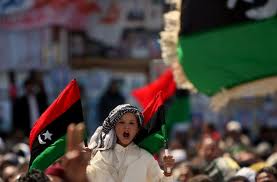
Libya: Most imams are opposed to Islamic extremism

Given the problems the Libyan regime is experiencing in arranging the current political balance – more or less one of tension followed by negative actions – it is imperative that the establishment of the election proceeds without any major disruption. Any hiatus arising from the activities of the militias or major political shifts by players in the elections will be viewed by the majority of the Libyan people as another government failure.

Of great assistance to the regime is the fairly consistent advice from the imams that honest Libyans should baulk at the disruptive activities of extremists. This message has been put out in direct and simple language through the mosques although, as yet, there is no guidance available as to the relative importance of these main religious leaders.

In an interview, Minister of Religious Endowments Dr Hamza Abu Faris stressed the importance of opposing the hostile movements controlled by the Islamic fundamentalists. Faris, like many Libyans who were educated at serious Islamic schools, takes a much more philosophical view concerning the entry into the country of non-Islamic workers, and is content to endorse the response of the average Libyan against the Islamists, as do most of the imams who are working in the country.

The religious establishment, rather like the National Transitional Council (NTC), is anxious for the country to avoid civil war and the Islamist terrorist attacks that occur elsewhere in places such as Iraq, Afghanistan and now Syria. It is very aware that, throughout the long battle for the control of Libya, religion has not played a damaging or divisive role and that there are real causes for discomfort which must be faced if the country adopts a radical Islamist programme. The imams would like to see Libya escape without a fully-fledged civil war.

For more news and expert analysis about Libya, please see Libya Focus and Libya Politics & Security.

© 2012 Menas Associates

Tuesday, 15 May 2012

Mali: ECOWAS threatens to re-impose sanction on military officials


The West African regional bloc ECOWAS has said it will re-impose sanctions on officials who led a coup in Mali in March, on grounds of them thwarting a return to constitutional rule. Back in April, ECOWAS lifted sanctions after the coup leaders agreed to return power to a civilian government, but in a recent statement the bloc said the junta was still interfering in the country's politics.

ECOWAS objects to the junta's plans to replace interim President Djouncounda Traore. Speaker of parliament Traore was sworn in as part of the deal under which the military would return the country to civilian rule. Coup leader Capt Amadou Sanogo has called for a national assembly of civil society groups to appoint a new interim government once Traore's term officially ends on 22 May.

ECOWAS wants Traore to continue to lead the interim government for another year. The bloc released a statement, saying: "Failure on the part of the (junta) and their civilian allies to clearly reaffirm their commitment to the transitional arrangement in the next few days will be met with the immediate reinstatement of the targeted sanctions."

In March, a group of army officers led by Capt Sanogo toppled President Amadou Amani Toure, saying he did little to curb the Tuareg-led rebellion in the north. After ECOWAS imposed sanctions, the coup leaders agreed to start a transition back to civilian rule, and parliamentary speaker Traore was sworn in as interim president.

Sources: BBC News, Reuters, AP

For more news and expert analysis about the Sahara region, please see Sahara Focus.

Monday, 14 May 2012

Nigeria: SEC castigates bourse during Committee testimony

The on-going investigative hearing by the Ad-Hoc Committee of the House of Representatives investigating the near total collapse of the Nigerian capital market has continued to throw up revelations about the workings of the stock exchange, its operators and regulators.

Appearing before the Ad-Hoc Committee on 7 May, the Director General of the capital market regulator, the Securities and Exchange Commission (SEC), made certain revelations about the numerous financial infractions committed by the management of the Nigerian Stock Exchange (NSE), which had been led by Ndi Okereke-Onyuike until her removal by SEC in 2010.

According to SEC's Arunma Oteh, it was found that the NSE was riddled with incidents of financial scheming, misrepresentation, false accounting, misappropriation and questionable transactions. For instance, it was found that NSE bought a yacht for N37 million and wrote down the book value within one year by recognising it in its books as a gift presented during its 2008 long-service award, yet there are no records of the beneficiary.

The NSE also spent N186 million for the purchase of 165 Rolex wristwatches as gifts for awardees, of which only 73 were actually presented. The outstanding 92 watches valued at N99.5 million remain unaccounted for.

An SEC Inspection team to the NSE also made the following findings: weaknesses in corporate governance; weaknesses in risk management; weaknesses in internal control; insufficient oversight of brokerage firms and listed companies; and inability to enforce the rules.

The inspection team further found that more than 2,700 investor complaints lodged at the NSE had yet to be treated. These complaints ranged from unauthorised sales of shares to withholding of proceeds of sale of shares. It also found that the NSE investor protection fund was not being properly administered.

For more news and expert analysis about Nigeria, please see Nigeria Focus and Nigeria Politics & Security.

© 2012 Menas Associates