Monday, 10 September 2012

Nigeria: Power plant pricing dispute

Sources have revealed that the Ibom Power Plant, which is one of Nigeria's power generating companies that is part of the current privatisation process, has been purchasing gas from Seven Energy's subsidiary, Septa Energy, at a rate that is higher than the US$1.50 that the Federal Government prescribed for purchasing gas from oil majors. The Geregu Power Plant has also been buying from Seplat Petroleum Development Company at a negotiated price which is different from the prescribed price.
Incidentally, both Septa and Seplat have stakes in Oil Mining Leases (OMLs) 4, 38 and 41 which were divested by Shell and its joint venture partners Eni and Total. It will be recalled that Seplat - which is a merger of two indigenous companies; Shebah E&P and Platform Petroleum - secured a 45% stake in the OMLs with NNPC retaining its 55% stake which are assigned to its Nigerian Petroleum Development Company (NPDC) subsidiary.
In turn NPDC sub-assigned the production and development of the blocks to Septa Energy in 2010 in an arrangement that was termed a Strategic Alliance Agreement (SAA). The latter saw Septa take on the petroleum operation costs and the provision of technical expertise for the production and development of the blocks. Septa is currently constructing a Central Gas Processing Facility at Eket in Akwa Ibom State.
For more news and expert analysis about Nigeria, please see Nigeria Focus and Nigeria Politics & Security.

© 2012 Menas Associates

Thursday, 6 September 2012

Abdullah Senussi is returned from Mauritania to Libya


According to reports from Mauritania's Foreign Ministry the infamous former security chief and Colonel Qadhafi's brother-in-law, Abdullah Senussi, was released on Wednesday 5 August following a visit by Libyan Foreign Minister, Ashour Bin Khayal, and Chief of Staff, Yousef Mangoush. He was then handed over to the Libyans and it is understood that he is now on his way to Libya.

While the extradition from Tunisia of the former prime minister Mahmoud al–Baghdadi was of some interest, he was really just a technocrat. There is no doubt that Senussi is a much more important prize, because not only was he at the heart of Qadhafi's inner circle for many decades, but he was almost certainly responsible for almost all of the regime's most infamous crimes. These include overseas acts of terrorism – including the UTA and Lockerbie bombings and many others – but also decades of repression against the regime's domestic opponents. In addition there was the crackdown in Benghazi which sparked the 2011 revolution; Senussi's most notorious act, however, was his alleged orchestration of the June 1996 massacre of over 1200 inmates at Abu Salim prison.

Senussi probably knows more secrets about the Qadhafi regime than anyone else, with the possible exception of the former intelligence chief and foreign minister, Musa Kusa, who defected during the 2011 revolution. Senussi will no doubt be extensively debriefed and interrogated before any trial but there can be no doubt that that he will be found guilty of numerous crimes and will almost certainly be executed. Anything less would be unacceptable to the majority of Libyans for whom Senussi was the most feared and hated member of the Qadhafi regime.

For more news and expert analysis about Libya, please see Libya Focus and Libya Politics & Security.

© 2012 Menas Associates

Monday, 3 September 2012

Algeria: Amar Ghoul hints at (re-)joining government

A long article in the Pan-Arab Al-Hayat newspaper on 27 August supported the rumours that have been circulating for the last few weeks that Amar Ghoul is making a play to get back into government, either as a minister or possibly even Prime Minister.
 
He was a member of the Movement of Society for Peace (MSP) and the Minister of Public Works in the previous government. However, with the MSP no longer part of the Presidential Alliance, and with Ghoul now defecting from the MSP to form his own TAJ Party, his political future is the focus of much speculation.
 
In a seminar prior to the TAJ's constituent assembly, Ghoul gave repeated and strong backing for President Bouteflika, indicating his willingness to join the presidential alliance from which the MSP had withdrawn. He was clearly hinting that he was willing to take his new TAJ party back into such an alliance, which currently includes the National Liberation Front (FLN) and the National Rally for Democracy (RND).
 
Ghoul has a potentially significant political following, especially in the Algiers region, which includes a number of resigned MSP figures and some of the deputies from the parties that made up the May election's Green Algerian Alliance, including the MSP, the Islamic Renaissance Movement (Ennahda) and the Movement for National Reform (Islah). There is also speculation that  Ghoul may be attracting a following, albeit perhaps small, from certain Algerian student movements.
 
The latest rumour is that Ghoul may return to government, possibly reinstated as Minister of Public Works, in a ministry which could be expanded to include both transport and water. His name is also being touted as the possible new Prime Minister (to replace Ahmed Ouyahia), but this would seem to be a long shot.
 
For more news and expert analysis about Algeria, please see Algeria Focus and Algeria Politics & Security.

© 2012 Menas Associates

Thursday, 30 August 2012

Nigeria: Traders make huge profits

Sources have revealed that some traders who were recently awarded crude term contracts by the federal government are set to make profits of as much as $9 million per trade after paying commissions.

Already, some traders have started enjoying the fruits of the term contracts. Walter Wagbatsoma, the owner of Ontario Oil and Gas, is said to have bought five vessels to the tune of $45 million to bolster his company's fleet. It will be recalled that Wagbatsoma, along with his company and other directors in it, was arraigned by the Economic and Financial Crimes Commission (EFCC) for gross abuses perpetrated through the subsidy scheme.
 
For more news and expert analysis about Nigeria, please see Nigeria Focus and Nigeria Politics & Security.
 
© 2012 Menas Associates

Wednesday, 29 August 2012

Ghana: NPP launches its campaign for December 2012 elections

In a bid to take back the political initiative from new President John Mahama, the New Patriotic Party (NPP) launched its manifesto, entitled “Transforming Our Lives; Transforming Ghana, building a free, fair and prosperous society”, and held a campaign rally at Mantse Agbona in James Town which is one of the poorest areas of the capital Accra.
 
The 2012 presidential candidate, Nana Akufo-Addo, his running mate, Dr Mahamudu Bawumia, and all of the NPP parliamentary candidates were officially presented to the electorate. Former President John Agyekum Kufuor also spoke at the event. This was meant to show the NPP's new sense of unity cementing the bonds between Akufo-Addo (Akypem); Bawumia (Northern Muslim ex-President Kufuor (Ashanti).
 
Akufo-Addo got that message across effectively and concentrated on pushing an overall positive note – about the NPP's determination to invest in mass education and training, and boost opportunities for entrepreneurs. Secondary education for all is the NPP's big new idea – even if they are doubts about its cost see Comment & Analysis) If elected the transformation of the country's education structure would be the cornerstone of NPP government policy. Akufo-Addo told supporters his party would redefine a school system in which 60% of children did not reach secondary school and some did not even make it into the classroom.
 
The NPP's launch went down well in Greater Accra which is a swing region and a key test of voter sentiment. It established the NPP as policy-heavy and was a sharp rebuke to the NDC which had been relying on strong voter sentiment for the late President John Atta Mills and his role as “prince of pace”.
 
The manifesto launch has both sharpened and elevated the election campaign above the previous name calling on both sides. The attack dogs are, however, still operating but both Akufo-Addo and Mahama are trying to rise above it by adopting a statesmanlike demeanour. The NPP chairman denigrated the Mills-Mahama government as Ghana's “worst-ever” which, to many, might seem hyperbole but it will certainly spark a fierce response from the NDC's own militants.
 
For more news and expert analysis about Ghana, please see Ghana Politics & Security.
 
© 2012 Menas Associates

Tuesday, 28 August 2012

Algeria: UMA squabbles commence

 
The next summit of the Arab Maghreb Union (UMA) is to take place on 10 October at Tabarka, in Tunisia. Almost as soon as this was announced by the Tunisians in late July, the Algerian foreign affairs ministry disputed it, saying that negotiations were still under way and that the date of the summit will not be officially set until they are completed.

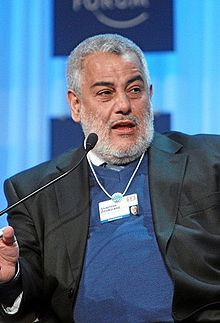
The Moroccans have also poured cold water on the momentum towards greater Maghreb cooperation. In an interview in a Moroccan daily on 26 July, prime minister Abdelilah Benkirane said that the conditions were not right for the high-level meeting to take place: “The Moroccan and Algerian peoples are united by lines of friendship and fraternity, but it is depressing that the Algerian leadership takes another view with regard to the question of our territorial integrity.” The old chestnut of the status of the Western Sahara, claimed by Morocco but also by the Algerian-backed Polisario movement is once again rearing its ugly head.

Earlier in the year, during a flurry of high-level diplomatic visits between Morocco, Algeria and Tunisia, hopes for the revival of the UMA, stagnant for some 20 years, were high. On 18 February, the 23rd anniversary of the establishment of the union in Marrakech in 1989, President Abdelaziz Bouteflika told his Maghrebi counterparts that the promotion of economic cooperation was “a vital and pressing need”. Other senior Algerian officials suggested at the time that re-opening the border with Morocco was also on the cards. Officials from both countries announced that the question of the Western Sahara would be put aside, to be resolved through UN channels, as a means of moving forward. However, old ideologies are clearly not easy to bury, and it looks like the path to UMA co-operation will be far from straightforward as a result.

For more news and expert analysis about Algeria, please see Algeria Focus and Algeria Politics & Security.

© 2012 Menas Associates

Wednesday, 22 August 2012

Nowhere to hide for Qadhafi supporters in Egypt


Qadhafi supporters who fled to Egypt as the revolution in Libya progressed will soon find themselves on an unwanted return journey. The Egyptian ambassador to Libya, Hisham Abdul-Wahab, announced that their exile would soon be over as soon as the last legal technicalities were sorted. The Judicial Co-operation Convention that has been signed between the two countries means that several thousand persons could be affected.

One person who would receive a particularly special welcome, if he should he forced to return, is Ahmed Qadhafaddam who was Qadhafi's cousin and close confidant. He is widely believed that he is currently in command of very large sums of Libyan state money, assuming that he and his confederates have been able to conceal so large a cache. It is believed that he has also been financing the current insurgency campaign by Qadhafi supporters inside Libya. For many years he managed and manipulated Libyan relations with Egypt and he will remain strong for as long as he and others can fund the insurgency and are tolerated by Cairo as non-diplomatic guests.

Meanwhile Abdul-Wahab is attempting, as a priority, to arrange the release of those Egyptians who are being held in Tripoli by the militias and a connection between the two events is not hard to make.

For more news and expert analysis about Libya, please see Libya Focus and Libya Politics & Security.

© 2012 Menas Associates