Showing posts with label Algeria news online. Show all posts

Friday, 6 June 2014

Algeria: Prime Minister unveils the government's five-year plan

Also on Sunday 1 June, Prime Minister Abdelmalek Sellal unveiled the government's plan of action for the next five years. As so many of the government’s five-year plans have come to grief in red-tape, delays, postponement, corruption and general inefficiencies, and are little more than annual reiterations, they are no longer taken quite as seriously as in the early years of the Bouteflika era.
Nevertheless, the National Press Service (APS) gave it top billing alongside the start of Ouyahia’s constitutional consultations.

According to APS, the plan is particularly focused on national security and stability, as well as building an emerging economy. In tones reminiscent of the earlier and more optimistic years of the Bouteflika era, Sellal said that the plan aims to enhance national reconciliation by convincing militants to lay down their arms and return to mainstream society. At the same time, counter-terrorism will be reinforced to safeguard homeland security.

As part of that reconciliation, Sellal said that Bouteflika had decided to "lift the ban on leaving the country for some people suspected of terrorism”. Although Sellal declined to name these people, he was referring to the lifting of travel bans issued against members of the outlawed Islamic Salvation Front (FIS), which was dissolved by court order in 1992.
Members of the now-dissolved FIS continue to oppose Bouteflika's government. It was strongly opposed to his fourth mandate, boycotted the April elections and is now boycotting the latest constitutional reform process.

Sellal also said that the government would hold regular dialogues with civil society and elected assemblies. He claimed the government was working to divide power among the judiciary, the legislature and the executive branches, pledging that reform will continue to improve public service of justice in a bid to make it fully independent and free. These are, however, all promises that Algerians have heard many times before and no longer pay much attention to.

For more news and expert analysis about Algeria, please see Algeria Focus and Algeria Politics & Security.

© 2014 Menas Associates

Tuesday, 27 May 2014

French Defence Minister visits Algiers


Even more pressing for Algeria was the visit of French Defence Minister Jean-Yves Le Drian to Algiers on Tuesday 20 May, his first visit to Algiers. He met Foreign Minister Ramtane Lamamra, Defence Chief General Gaïd Salah, Prime Minister Abdelmalek Sellal and President Bouteflika himself. Details of their discussions have not been released, but are known to have centred on the deterioration of the security situations in both Libya and Mali.

It is widely believed that Le Drian asked Algeria for support for France’s new counter-terrorism mission for the Sahel which had been announced on 8 May. (For full details see Sahara Focus.) This will see a further 3,000 French troops deployed throughout Niger and Chad, in addition to 1,000 retained in Mali. Such support is more likely to be logistical than in the provision of Algerian troops, which Algiers would almost certainly decline.

It is also being rumoured that France broached the subject of Algerian intervention in Libya, although nothing has been publically released in that regard and, at this stage, it would seem very unlikely. 

For more news and expert analysis about Algeria, please see Algeria Focus and Algeria Politics & Security.

© 2014 Menas Associates


Monday, 12 May 2014

Belhadj comments on opposition, the “people” and the “street”

Ali Belhadj, the former deputy leader of the banned Islamic Salvation Front (FIS) had some interesting comments for the media on the subject of opposition to the government.

He confirmed that he had been approached by influential personalities in the regime but had rejected their offers. He also confirmed that the FIS is not part of the Coalition for Freedoms and Democratic Transition (CLTD) which only includes accredited political parties while the FIS is banned.
More interestingly, however, Belhadj put his finger on strengthening pulse of Algeria when he classified opposition parties into three categories: the accredited political parties; the unaccredited prosecuted parties such as the FIS; and an ignored party – “the people”. “The ignored party,” he said, “represents most of the Algerian people who boycotted the presidential elections and who have no trust in the executive.”

He went on to say that he believes that people who cannot find a political way to claim their rights will take to the street to get them. 
For more news and expert analysis about Algeria, please see Algeria Focus and Algeria Politics & Security.

© 2014 Menas Associates

Monday, 28 April 2014

China-Algeria trade increases fifteen-fold

France lost its position as Algeria’s major supplier to China in 2013, according to the latest economic data, Naser al-Tamimi reported for Al-Arabiya on 26 March. The source of the data is not given, so we cannot comment on it. What we can say is that bilateral trade between Algiers and Beijing, according to UN data, has grown almost fifteen-fold in the past 10 years, from $608 million in 2003 to more than $9 billion by the end of 2013. The two countries have established what they call “the comprehensive strategic partnership”.

Algeria is now China’s top trade partner and largest export market in the Maghreb region. Beijing’s trade with Algeria represented over 40% of China’s total trade with Maghreb (nearly $21 billion) in 2013. As we reported last month, Algeria is a lucrative market for Chinese engineering. Latest data show that Algeria is the biggest market for Chinese contractors in Africa, after Nigeria.

A little known feature of Chinese-Algerian trade, possibly because of the prominence given to the establishment of French auto-plants in Algeria, is that China, according to the China Association of Automobile Manufacturers (CAAM), exports more cars to Algeria than any other country. Algeria was China’s top vehicle export destination in 2012 and 2013. Chinese state manufacturer FAW has recently signed a deal to build an assembly plant in Algeria, producing 10,000 vehicles a year. A number of defence industry sources have recently commented on Algeria’s interest, as one of the world’s major arms purchasers, in the possible procurement of Chinese weaponry.

For more news and expert analysis about Algeria, please see Algeria Focus and Algeria Politics & Security.

© 2014 Menas Associates

Tuesday, 22 April 2014

Algeria: Some electoral statistics

According to government sources the electoral roll, which cannot be  accessed by candidates or electoral monitors for reasons of “data  protection” (see below, fraud), listed 22,880,678 voters of which  21,871,678 are registered in Algeria while 1,009,000 are registered  as living abroad. The authorities mobilised 11,756 polling centres and 49,971 polling stations, including 167 mobile stations. 398 of these polling stations were abroad.

Some 460,000 civil servants were mobilised to officiate at the elections. Polling centres and stations were open from 8 am to 7 pm. Wallis had the discretion to open one hour earlier and extend voting by one hour.

Algerians abroad could vote from last Saturday up until Thursday. Nomads in remote areas (e.g. Tamanrasset, Illizi, Adrar) could vote at 167 mobile stations between Monday and Thursday. Some 59,000 nomads are involved. Bouteflika cast his vote at El Biar in Algiers and was helped into the polling station in a wheel-chair. It was the first time he has appeared in public since his election address at Setif on 8 May 2012 which is almost two years ago. 

For more news and expert analysis about Algeria, please see Algeria Focus and Algeria Politics & Security.

© 2014 Menas Associates

Friday, 11 April 2014

Algeria: Violence greets Bouteflika's campaign in Bejaïa


The most violent demonstration against President Abdelazi Bouteflika’s campaign was probably that of Saturday 5 April in Bejaïa in the mainly Berber Kabylie region. Protesters stormed and broke up the Bouteflika campaign rally being addressed by Abdelmalek Sellal. They took over the platform, set fire to Bouteflika’s portraits and burnt down much of the venue; attacked a television crew covering the event, injuring four of them, and stoned the Bouteflika cavalcade as it left town.

Three days later, hundreds of students staged a more peaceful protest against Bouteflika in Bejaïa, marching from Bejaïa University campus to the local government headquarters, calling for a boycott of the presidential election on 17 April and urging citizens to mobilise for “peaceful change".

Sellal abandoned the Bejaïa rally and, perhaps unwisely, moved on the next day to the Berber capital of Tizi Ouzou where he and his entourage were greeted with similar animosity. Dozens of students tried to demonstrate ahead of the rally chanting "Free and democratic Algeria!" and "Boutef, pull out!", before the police moved in and arrested about 20 of them. 

For more news and expert analysis about Algeria, please see Algeria Focus and Algeria Politics & Security.

© 2014 Menas Associates

Tuesday, 8 April 2014

Qatar's Emir also visits Algeria


The Emir of Qatar, Sheikh Tamim Bin Hamad Al-Thani, visited for two days this week on an invitation by President Bouteflika. The Emir was accompanied by Qatar Foreign Minister Khalid Bin Mohammad Al-Atiyya. In what was foreseen as something of a diplomatic faux pas, the visit coincided with that of John Kerry.

Sheikh Tamim arrived in Algiers late on Wednesday 3 April as part of a tour that had earlier taken him to Jordan and Sudan. He left for Tunisia later on Thursday.
Attending the meeting broadcast on Algerian state television were Algerian Parliament Speaker Abdul Qadir bin Saleh, head of Algeria's national assembly Al-Arabi Ould Khalifa and Algerian Finance Minister Karim Djoudi.

The exact details of the bilateral talks were not revealed in a statement issued on the visit by the Algerian Presidency. However, the visit is widely believed to been an attempt by Qatar to seek support in its current isolation in the Gulf Region as a result of its conflicts with Saudi Arabia, Bahrain and the UAE. Although relations between Qatar and Algeria have at times been tetchy, the Emir’s family has extremely close relations with Bouteflika.

For more news and expert analysis about Algeria, please see Algeria Focus and Algeria Politics & Security.

© 2014 Menas Associates

Friday, 9 August 2013

RND blocking Ahmed Ouyahia's return

Further to our report (Algeria Politics & Security - 26.07.13) of former prime minister Ahmed Ouyahia's recent meeting with DRS boss General Mohamed Mediène to discuss his possible candidacy for the presidency, members of his National Democratic Rally (RND) party have set up a National Salvation Front to bar his return to the political limelight.
 
According to reports in the daily Echorouk, hundreds, if not thousands, of militants belonging to the RND from at least 30 wilayas have threatened to block the holding of the party's upcoming congress if the current interim Secretary General, Abdelkader Bensalah, does not take the necessary measures to sideline for good those supporters of former Secretary General Ahmed Ouyahia who have been accused of fomenting chaos and disunity within the party.
 
Hafi Mohamed Hatem, a member of the so-called RND Salvation Front, or Bureau as he called it, from the Algiers wilaya, was quoted mby Echorouk as saying that Ouyahia's legacy had left the RND party in a pitiful shambles across all 48 wilayas of the country. Hatem also indicated that a National Salvation Front was being set up across 30 wilayas to act as a powerful lobbying force to stop the return of Ouyahia's supporters to the upper echelons of the RND and so save the party from what he described as 'dismemberment and implosion”.
 
Hatem also explained that the other main objective of this National RND Salvation Front was to do everything possible to preclude Ouyahia's political comeback. As we reported two weeks ago, there is pressure from his supporters, which may include the DRS, to stand as a candidate for the upcoming 2014 presidential elections under the RND banner, despite his resignation from the party earlier this year.
 
(Note: Ouyahia resigned from the RND on 3 January 2013 amid much acrimony and rancour. There was major opposition to him from the party's rank and file for his overbearing behaviour and divide-and rule policy.)
 
For more news and expert analysis about Algeria, please see Algeria Focus and Algeria Politics & Security.
 
© 2013 Menas Associates

Friday, 12 July 2013

European Commission President visits Algeria

The European Commission President José Manuel Barroso arrived in Algeria on Saturday 6 July for a two-day visit. He began by meeting Prime Minister Abdelmalek Sellal to discuss bilateral ties and issues of mutual interest.
 
The most significant outcome of his visit was the 7 July signing by Sellal and Barroso of an MoU between Algeria and the EU on energy. It seeks to boost the excellent energy co-operation between the two sides and open promising development prospects. It covers all aspects of co-operation in energy - both conventional and renewable energies - including technology transfer, expertise and management. Barroso said that the EU also wanted to establish closer ties with Algeria in the economic and political fields. “We are very interested in having even closer ties [with Algeria]. My visit aims at strengthening ties in the field of political dialogue and economic co-operation.”
 
Barroso said before his departure on Monday that economic development and bilateral trade would help ensure stability in the broader Maghreb region. “We believe that enhanced regional co-operation would bring benefits in terms of prosperity and security, both for the countries of the region and the European Union,” he said. With reference to the In Amenas terrorist attack, he said the EU is committed to stability in Algeria. “Algeria is a key partner for the EU, both at the bilateral and regional levels … Natural gas is a strategic issue for both parties: Algeria is a major supplier to Europe, while Europe is by far the largest customer of Algeria.”
 
For more news and expert analysis about Algeria, please see Algeria Focus and Algeria Politics & Security.
 
© 2013 Menas Associates

Monday, 1 July 2013

Algeria: Orascom reaches agreement on Sorfert dispute

After several years when Algeria's relationships with its actual and potential joint-venture partners in the petrochemicals sector have been strained, a deal between Sonatrach and Egypt's Orascom Construction Industries (OCI) suggests that some progress may still be possible – but the political impediments are still daunting.

On 27 May, the companies, which are jointventure partners in the 2 million tonne/year Sorfert Algérie greenfield nitrogen fertiliser complex, signed an amendment to the shareholders' agreement which OCI said had agreed “mutually beneficial arrangements, which will allow for the earliest possible start of production and commercial activities of the company”.

OCI chief executive Nassef Sawiris described the agreement as a “milestone”. There are good economic and financial reasons to allow the project to go forward and the plant to start producing as it has mostly been financed by Algerian banks and the terms of the loans are not being met.

For more news and expert analysis about Algeria, please see Algeria Focus and Algeria Politics & Security.

© 2013 Menas Associates

Monday, 17 June 2013

Algeria: Creation of military zones along Tunisian border

 
Algeria is, according to a report in El Khabar, planning to build 20 closed military zones along the Algerian-Tunisian border in an attempt to prevent arms smuggling and terrorist infiltration. The zones will be off-limits for civilians without a permit. Although the report claims that similar moves have been successful in minimising infiltrations and smuggling on the Malian and Libyan borders, evidence on the ground, such as In Amenas, suggests that this success has been exaggerated.
 
New Algerian-Tunisian security agreements include a military co-operation committee that provides instant exchange of information in order to deal efficiently with cross-border smugglers and infiltrators. This agreement facilitates the tracking of suspects as well as mutually aiding in investigations related to “jihadist” networks.
 
According to the El Khabar report, the Army leadership began applying a pre-agreed security plan of operational co-ordination with the Tunisian Army three weeks ago. The plan identifies over 80 border points over more than 956km that are suspected of being used for infiltration and smuggling.
 
For more news and expert analysis about Algeria, please see Algeria Focus and Algeria Politics & Security.
 
© 2013 Menas Associates

Monday, 10 June 2013

FIS' Ali Benhadj criticises Bouteflika

 
 In the wake of President Abdelaziz Bouteflika's latest hospitalisation in France, the outlawed Islamic Salvation Front's (FIS) deputy leader, Ali Benhadj, has said that Algeria is in a worse state today than when the president took office. Speaking in May exclusively to Asharq Al-Awsat, he called on the president to leave power. He emphasised that Bouteflika “took power of an ailing country and will leave it in an even worse state”.
 
Criticising Bouteflika's claims of development and achievement, the Islamist leader said: “What some people consider achievements are in fact projects that go back to the initial years of Algeria's independence. However, their execution has been delayed for more than 35 years.” He added that “some of these achievements were made thanks to suspicious deals that plundered huge sums of public money. Benhadj stressed that “one cannot praise material achievements [made] under tyranny; when people's hopes are being suppressed and their legitimate rights are being denied”.
 
Benhadj also said: “We must differentiate between the health of the president and that of any ordinary citizen. The president's health will have an impact on society at large and state institutions, which are known to be corrupt. The ailing state becomes even sicker when the president is ill, especially as the president holds broad powers.”
 
For more news and expert analysis about Algeria, please see Algeria Focus and Algeria Politics & Security.
 
© 2013 Menas Associates

Monday, 20 May 2013

Algeria is modernising its military

 
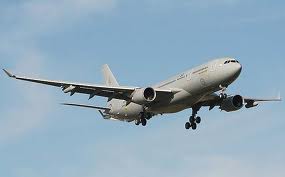
The Algerian Air Force has evaluated Airbus Military's A330 Multi-Role Tanker Transport (MRTT) and unconfirmed reports indicate that it will probably purchase three aircrafts. According to Aviation Week & Space Technology, an A330 MRTT destined for the UK's Royal Air Force conducted trials at the Algerian Air Force's Boufarik military transport base near Blida in early May.
 
The demonstration was requested by the Algerian government, which means the likelihood of a sale is high. The A330 MRTT is based on the commercial A330-200 passenger jet and is able to carry up to 111 tonnes of fuel in its wings. It can be used as a pure transport aircraft able to carry up to 300 troops, or a payload of up to 45 tonnes. It can also be converted to accommodate up to 130 stretchers for Medical Evacuation (MEDEVAC) missions.
 
Algeria is modernising its military and seems to be replacing some of its older Russian equipment. It operates several Ilyushin Il-78 Midas aerial refuelling tankers. According to the Secret Difa3 blog, Boeing demonstrated a C-17 to the Algerian Air Force at the Tamanrasset test centre on 22 April. It was reportedly flown from the US Air Force's 446th Airlift Wing at McChord Air Force Base in Washington. Algeria is apparently looking to order 6-8 Globemaster IIIs but this cannot be confirmed.
 
For more news and expert analysis about Algeria, please see Algeria Focus and Algeria Politics & Security.
 
© 2013 Menas Associates

Tuesday, 7 May 2013

Algeria: Sonatrach may take stake in Mozambique gas assets

 
Sonatrach's CEO Abdelhamid Zerguine was quoted by APS on 30 April as saying that Sonatrach is in talks to farm into Mozambique's offshore gas projects operated by Eni and Anadarko.

Anadarko, which has been in Algeria since the 1980s, is the largest foreign operator there, operating three oil and gas production sites, with production approaching some 350,000 b/d. It has recently been responsible for discovering one of the world's largest gas finds in Mozambique's Offshore Area 1 of the Rovuma basin. The discovery is likely to transform the economic prospects of Mozambique and Southern Africa.

Zerguine was speaking after signing a Memorandum of Understanding with the head of Mozambique's Empresa Nacional de Hidrocarbonets (ENH), Nelson Ocuane. He said Sonatrach was interested in buying part of a minority stake held by ENH in the offshore gas fields. “We want to have a place, but on the Mozambican side,” he said.

Zerguine did not give details of the size of stake Sonatrach was seeking to acquire, but said a 5% holding would cost it around US$1 billion. The memorandum also opened the way for Sonatrach to acquire exploration blocks in Mozambique.

For more news and expert analysis about Algeria, please see Algeria Focus and Algeria Politics & Security.

© 2013 Menas Associates

Monday, 22 April 2013

Algeria: Protests Continue in South

 
There are no signs that the protests by the jobless in Algeria's desert regions are abating. According to the National Committee for Protection of the Rights of the Unemployed (CNDDC), and reported in the press, some 1,000 people turned out for the demonstration of jobless youths held in Ghardaia last Saturday (April 13).

The protest, unlike the one the previous week which ran into heavy police violence, was peaceful from beginning to end, just as organisers wanted it to be.

CNDCC members were determined to distance themselves from the violence of the previous demonstration in Ghardaia and the violence that had also broken in Ouargla the previous day (April 12). One young man had been killed in Ouargla from tear gas asphyxiation.

Tahar Belabbes, the national co-ordinator for the CNDCC, expressed disapproval over the clashes that erupted in his hometown of Ouargla. He said: “We have criticised and warned against the risk of young people being manipulated into becoming violent. Our movement is a peaceful one and will remain so.”

The next demonstration is scheduled to take place in Djelfa.

Belabbes said that the protests would not stop until the authorities engaged in a frank and transparent discussion with representatives of the unemployed. He noted that the CNDDC had representatives in all 48 provinces.

He added: “If the authorities intend to play the violence card to discredit us, they will need a whole army across all 48 provinces of the country to manipulate young people and spur them to commit acts of violence and counter-violence."

The movement's leaders have made no secret of their ambition of positioning themselves as an alternative to the traditional system of local representation and have been targeting local elected representatives and prominent figures, who they say have no right to speak on behalf of young people.

For more news and expert analysis about Algeria, please see Algeria Focus and Algeria Politics & Security.

© 2013 Menas Associates

Monday, 8 April 2013

Algeria: UN Mediator for the Sahara on New Tour in North Africa

The UN mediator for the Sahara, Christopher Ross, undertook a two week tour of North Africa (March 20 – April 3) in another attempt to persuade the parties to the Western Sahara conflict to sit at the table of direct negotiations.
 
After visiting a month or more ago the capitals of the Group of Friends of Western Sahara (Washington, Moscow, Paris, Madrid, London), as well as Germany and Switzerland, to seek international support for his approach, Ross resumed contacts over the last two weeks with the parties directly involved in the conflict: Morocco, Algeria, Mauritania and the Polisario Front.
 
UN deputy spokesman, Eduardo del Buey, told reporters in New York that the purpose of this new North African tour was to prepare the ground for a “possible resumption of direct talks” on the Sahara conflict, as a settlement of this issue “becomes more urgent than ever” in view of the “growing risk of instability in the Sahel.” He said that Ross's trip was“to prepare for the next phase in the negotiating process and a possible resumption of direct talks to achieve a mutually acceptable political solution.”
 
For more news and expert analysis about Algeria, please see Algeria Focus and Algeria Politics & Security.
 
© 2013 Menas Associates

Tuesday, 2 April 2013

Mali should be under UN mandate, says Bouteflika adviser

One of President Abdelaziz Bouteflika's close advisers on terrorism and trans-national crime, Kamel Rezag-Bara , has issued a stark warning to the states involved in the military intervention in Mali, saying that the tensions in the region could destroy the state of Mali if political dialogue between rival camps is not reestablished as a matter of priority.
 
Speaking at a seminar, he also said that the number of parties involved in the conflict should be reduced urgently and the dossier be handed to the UN to avoid the exacerbation of the crisis. Arguing that Touareg demands had grown while the government in Bamako ignored them, Bara said political dialogue between the Malian government and the tribal groups in the north, Algeria's favoured policy all along, offered the only way out of the conflict. It is not often that the president's close advisers speak publicly on major policy issues.
 
For more news and expert analysis about Algeria, please see Algeria Focus and Algeria Politics & Security.
 
© 2013 Menas Associates

Monday, 4 February 2013

Mystery of why Libya's General Hifter is in Algiers

 
The second is the mystery of the Libyan general in Algiers. General Khalifa Belqasim Hifter was one of Colonel Qadhafi's top commanders in Chad in the late 1980s where he and his men were captured. Angered at Qadhafi's handling of the campaign, Hifter was given refuge in the USA, where he became an advisor to the CIA. In 2011 he returned to Libya to take a top command post in the rebel army. He was widely suspected by many Libyans of being the “CIA?s man in Libya”.

Around October 2012 he is believed, with the US? apparent blessing, to have formed an armed „anti-terrorist? unit. In December, Hifter and his unit where reported to us as being in Algiers where they had been sent by the US and placed under the command of the DRS. Jordan's anti-terrorist group was said to be either with them or about to join them. Their mission was said to be in Mali, although all the signs are that it never took place, which was presumably because of the French intervention.

The DRS and Hifter go back a long way and have a close relationship. For example Qadhafi was causing Algeria a lot of trouble in 1993 by very publicly saying that he wanted to broker a deal between the FIS and the Algerian regime. He was also giving the impression of helping the FIS although FIS sources deny that he was doing so.

In that year Hifter was brought, with US assistance, from his new home near Langley (Virginia) to Tebessa, where he was used to send a very strong message to Qadhafi saying that Algeria would help Qadhafi's opponents in Libya unless he stopped interfering in Algeria's affairs. Qadhafi stopped his meddling. Our current question is: What was Hifter?s planned US/DRS mission in Mali? We hope this will be revealed to us in the next few weeks.

For more news and expert analysis about Algeria, please see Algeria Focus and Algeria Politics & Security.

© 2013 Menas Associates

Tuesday, 8 January 2013

UN Security Council authorises military action in Mali


As reported in Algeria Politics & Security - 21.12.12, theUnited Nations Security Council unanimously adopted Resolution 2085 (2012) under Chapter VII of the UN Charter authorising the deployment of an African-led International Support Mission in Mali (AFISMA) “for an initial period of one year”. The resolution enables military action to wrest northern Mali from the control of al-Qa'ida-linked extremists.
As we emphasised, however, the resolution contains a number of critical benchmarks which must be adhered to before military intervention can proceed. These are that there must first be progress on political reconciliation, elections and the training of the African troops and police involved. Equally important is that UN Secretary-General Ban Ki-moon must “confirm in advance the council's satisfaction with the planned military offensive operation”. In effect, this is almost the same as saying that a further resolution must be obtained before actual military intervention can proceed. And, if all those benchmarks are followed, a military operation cannot be expected to begin until September or October 2013.
Algeria is strongly opposed to any such military intervention but the wording of UN Resolution, 2085 (2012) with all its conditionalities, does provide Algeria with the time and backing to try and manage a diplomatic solution to the crisis.
For more news and expert analysis about Algeria, please see Algeria Focus andAlgeria Politics & Security.
© 2012 Menas Associates

Monday, 10 December 2012

Algeria: Response of opposition parties

 
The opposition Rally for Culture and Democracy (RCD) party issued a statement saying: “All of the observers noted the government's determination to promote criminality and incompetence through its lists, increasing the risks of national destabilisation.”

The leader of the now-banned Islamic Salvation Front (FIS), Abassi Madani, called from his base in Qatar for a “massive boycott” of the vote, “to expose the Algerian regime and its oppressive practices”. While many former FIS voters boycotted the elections as an irrelevant and illegitimate exercise, most local Algerian analysts have seen the results as showing further evidence (following the 10 May elections) of the collapse of the Islamist parties.

MSP leader Bouguerra Soltani was disappointed and questioned the results saying: “The climate surrounding the elections and the various irregularities which occurred at every stage … damaged the sincerity and credibility of the results and destroyed their legitimacy.”

Local commentators put the continuing slump suffered by the Islamists down to the fact that the authorities allowed many new parties to be created as part of political reforms with the result that the Islamist vote fragmented. Mouloudi Mohamed, an analyst on Islamic issues, said, “The increased number of parties with an Islamist orientation has weakened their share on the political scene.”

There are also indications that a lot of Islamists have joined the newly-created moderate Islamist TAJ party led by Amar Ghoul, former senior member of the Green Algeria Alliance. As Ghoul is serving as the Minister of Public Works, he did not take part in the elections.

For more news and expert analysis about Algeria, please see Algeria Focus and Algeria Politics & Security.

© 2012 Menas Associates