National Iranian Gas Company (NIGC) managing director Javad Oji acknowledged that Iran has received a request from Turkey to decrease the gas it exports to that country. Oji said Iran is looking into the request and plans to take measures.
He also noted that the government has no plans to increase gas rates with the implementation of the second phase of the subsidies reform plan.
Oji's remarks followed those of Turkish Energy Minister Taner Yildiz, who said that Iran had rejected its demand for cheaper natural gas and that Ankara might resort to international arbitration: 'We voiced our discomfort to them [Iranian officials] over the price of the natural gas we import and told them that the prices are high … so an international arbitration court seems inevitable.'
The announcement that Iran and Turkey are engaged in a spat over gas rates was a surprise, particularly as it came amid diplomatic visits by Iranian officials to Ankara. Iran views its gas exports to Turkey strategically, given that the country could provide a gateway to the European gas market.
Evidently, Ankara has leverage as it imports gas from both Iran and Russia. Turkey may also be taking advantage of the international pressure currently being applied against Iran in order to bargain for better conditions. Tehran will not be interested in prolonging a dispute over gas prices with one of its most important customers.
For more news and expert analysis about Iran, please see Iran Strategic Focus.
© 2012 Menas Associates
Tuesday, 31 January 2012
Caspian cooperation discussed with Iran
Iran's deputy foreign minister Mohammad Mehdi Akhundzade visited Ashgabat this month. Although nothing concrete came out of the visit, he was apparently there to ensure that the two states are on the same page when it comes to the situation in the Caspian.
In press reports released after the visit, President Gurbanguly Berdymuhammedov said that Turkmenistan “stands for establishing a constructive dialogue in the Caspian basin” and called for “a coordinated, mutually acceptable decision on the status of this unique basin”. The usual call for the Caspian to be developed “in an atmosphere of peace and stability” was also made.
Relations between Tehran and Ashgabat have usually been good, but disagreements over the delimitation of the Caspian have occasionally strained ties. Iran has also sometimes been wary about Turkmenistan's role as a transport hub for US military supplies to Afghanistan and its friendly relations with Israel. In November an
Iranian MP accused Turkmenistan (as well as Azerbaijan) of being a base for Mossad.
The visit may also be linked with Iran's new Caspian oil and gas field, Sardar Jangal (see page 12). The precise location of the field has not been revealed but it may lie close to the maritime boundary with Turkmenistan, so Akhundzade's visit may have been intended to provide reassurances that it would not be drilling in disputed waters.
The trip may also have been aimed at securing more work for Iran's North Drilling Company in light of tightening international sanctions. Earlier this month Iranian oil officials announced that Iran had earned $300 million over the past five years by drilling 30 wells in the Turkmen sector of the Caspian, and plans to build more
wells in the years ahead. With new US and EU sanctions choking the Iranian economy, finding as many sources of foreign income as possible is a priority – this could raise complications for Turkmenistan as it seeks to boost the involvement of Western firms in its energy industry.
For more news and expert analysis about the Caspian region, please see Caspian Focus.
© 2012 Menas Associates
Friday, 27 January 2012
Egypt: Salafi rebuked by Speaker
The leader of the house - that is the eldest MP - Dr Mahmoud El Sakka opened the first session before the election of the speaker and his two deputies. Dr El-Sakka, 81, a member of Wafd, asked for recognition of the more than 800 Egyptians who had been killed in the protests that led to the overthrow of the former regime. “I invite the distinguished assembly to stand and read the fatiha (Muslim prayer) in memory of the martyrs of the 25 January revolution ... because the blood of the martyrs is what brought this day.”
Each new MP then had to read the oath. This process was going smoothly until Mamdouh Ismail of the Al-Asala, a Salafist party, added the phrase “in whatever does not contradict God's law”. The speaker rebuked him and told him to stick to the original text.
Prime Minister Kamal El-Ganzouri, who is not a member of parliament, also marked what has become known as 25 January Revolution Day. He commemorated those who gave their lives: “They have sacrificed for the sake of the nation and for achieving freedom, democracy and social justice.” But he showed also where his loyalties lay by paying obeisance to the army: “I salute the brave military council for meeting its promises.”
For more news and expert analysis about Egypt, please see Egypt Politics & Security.
© 2012 Menas Associates
Thursday, 26 January 2012
Nigeria: President Jonathan sacks police chief
Nigeria's President Goodluck Jonathan has sacked the country's chief of police Hafiz Ringim, pushing him into early retirement. The move comes after a number of attacks perpetrated by the Islamist sect Boko Haram, the latest of which on Friday 20th January killed 185 people.
The group is fighting to overthrow the government and impose Islamic law around the country.
According to AFP, Jonathan's decision was intended to meet "emerging internal security challenges". The calls for Ringim's resignation have been ongoing since a man suspected to be behind the Christmas Day bomb attacks on several churches escaped from police custody just weeks ago.
According to AP, Jonathan's office released a statement saying Ringim had been placed on "terminal leave" pending his planned retirement in the coming months. It went on to say that Mohammed Abubakar has been appointed as his replacement "as a first step towards the comprehensive reorganisation and repositioning of the Nigeria police force to make it more effective and capable of meeting emerging internal security challenges".
According to the document, all six of Ringim's deputies had also been approved for immediate retirement.
Sources: AP, AFP, BBC News
For more news and expert analysis about Nigeria, please see Nigeria Focus and Nigeria Politics & Security.
Iraq:Two bomb attacks leave 13 dead
Iraqi officials say that 13 people have been killed in two separate bomb attacks. According to reports, two brothers - both police officers – and at least eight of their relatives were killed following a house bombing in Musayyib, south of Baghdad, which is predominantly populated by Shi'a Muslims.
The Musayyib attack is said to have taken place at 0400 (0100 GMT), when several roadside bombs surrounding the house were detonated. According to AFP, the two dead policemen were Ahmed and Jihad Zuwaiyin. Six children are also believed to have been killed. Four people were reported to be injured and six homes nearby were also damaged.
In a similar but separate bomb attack, three people were also killed in Kirkuk. As well as the three fatalities, five others were injured.
Attacks of this nature have risen since US troops withdrew from Iraq at the end of last year.
Speaking to AFP, Police Brigadier General Adil Zain al-Abidine said the attack in the northern city of Kirkuk was caused by a motorcycle bomb parked near a primary school in the city centre.
These newest outbreaks of violence come amid a politically and socially fragile situation in Iraq, which has been made worse by governmental in-fighting and volatility.
Sources: AFP, Reuters, BBC News
For more news and expert analysis about Iraq, please see Iraq Focus.
Libya: Italy wants to resume its favoured trading relationship
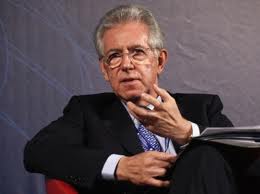
The Italian government is pressing hard for the endorsement of the contracts which were signed between Italy and Libya following the 2008 bilateral Treaty of Friendship. In pursuit of this goal, Italy's Prime Minister Mario Monti and his entourage of diplomats, including Foreign Minister Giulio Terzi and Admiral Giampaolo Di Paola, and businessmen visited Libya on 21st January for talks. The Italian authorities are hopeful that new offers of aid to Libya – including the strengthening of the national police force and improving security - will enable the original agreements to be restored.
Libya will receive US$5 billion from Italy over the next 20 years, including several major contracts of which the largest single project is for the construction of the coastal highway.
Meanwhile, Italy's ENI has reported that bilateral oil sector relations are very cordial. Its CEO, Paolo Scaroni, reported that ENI's output has now returned to pre-war levels of 260,000 b/d. The company has also signed a memorandum of understanding to undertake €380 million worth of social projects in Libya.
For more news and expert analysis about Libya, please see Libya Focus and Libya Politics & Security.
© 2012 Menas Associates
Wednesday, 25 January 2012
Ghana: Controversy over non-promotions of key police officers
Against the backdrop of the on-going cocaine for baking powder saga, which has previously be discussed in Ghana Politics & Security, and the controversial alleged role of police officials in the disappearance of a cocaine exhibit, Ghana's police force is now wracked by another controversy – albeit one that is internal to its operations. A recent round of police promotions of six officers from the rank of deputy commissioner of police to commissioner of police, which was announced by President John Atta Mills earlier this month, has been criticised for not including five high achieving officers.
According to local press, these five include the team leader of a successful investigation into a local serial killer who was responsible for over 30 deaths; the supervisor of an operation that seized almost 600kg of cocaine worth approximately US$38 million; a former director of the Ghanaian criminal investigations department with a mandate covering drug crime, terrorism and trafficking; and officers with a track record of success in international missions under United Nations task force and missions.
In particular some of these officers - who, under existing police policy, are usually promoted every four years - have not been promoted for around a decade. Specific reasons for their exclusion have not yet been released so one can only speculate whether or not there is an unsavoury reason but, given the current pressure on some sectors of the police, further internal police tension is unnecessary.
For more news and expert analysis about Ghana, please see Ghana Politics & Security.
© 2012 Menas Associates
Subscribe to:
Posts (Atom)