Friday, 29 June 2012

Egypt: Morsi's victory


The victory of Mohamed Morsi sets up an intriguing power struggle between the Islamists and the army but it will probably create more stability than a Ahmed Shafiq victory. Shafiq promised a return to law and order, and 48% of voters backed this stance, but if he had won, the Islamists would have remained a resentful and dangerous presence on the outside. What have emerged are two formerly secretive organisations, the Muslim Brotherhood and the army, having to manage a power sharing increasingly in the public gaze. What every arrangement emerges on 1 July will be dynamic and will evolve considerably over the coming months.

Much depends on the army, and its own internal dynamics. Many of the senior officers are due to retire. Others may not be so happy to have played the role the army had played in the past 18 months.

Morsi's own position has changed dramatically. Unlike former president Mubarak, who remained head of the ruling National Democratic Party, Morsi has renounced all his party affiliation. This marks his evolution from a radical fighter for a clandestine organisation into a putative world statesman. How much he can achieve will depend on how much power he can wrest back from the army. A former colleague, the defeated independent Islamist Abdul Moneim Abul Fotouh said the new president was “a ghost without the will or authority of a real president.”

For more news and expert analysis about Egypt, please see Egypt Politics & Security.

© 2012 Menas Associates

Nigeria: Jonathan shakes up security apparatus


Fresh from his controversial trip to Brazil for the UN Earth Summit, President Goodluck Jonathan has made some sweeping changes to his cabinet. Almost immediately upon his arrival, the President called for a meeting of the Security Council, where he announced the long-rumoured removal of Gen. Andrew Owoye Azazi (ret'd) as National Security Adviser (NSA) – a move that follows mounting concerns about Azazi's failure to get on top of the Boko Haram crisis in Northern Nigeria. Jonathan immediately announced Azazi's replacement as retired Col. Sambo Dasuki.

The president also announced the removal of Minister of Defence Haliru Mohammed Bello but is yet to name a replacement. Sources reveal that the President had considered appointing Azazi as Defence Minister, but is currently rethinking that option in the face of criticism of the presidency from Azazi's supporters.

Sambo Dasuki, who is a son of the deposed Sultan of Sokoto, Ibrahim Dasuki, was until his appointment as NSA a registered, card-carrying member of the opposition Congress for Progressive Change (CPC). In fact, Dasuki had also been a member of the CPC's Renewal Committee, which is spearheaded by former minister of the Federal Capital Territory Nasir El-Rufai.

Ibrahim Dasuki was deposed as Sultan during the administration of late military dictator Gen. Sani Abacha (1994-1998). His son, Sambo, has apparently been engaged in private business since he retired from the Nigerian army.

For more news and expert analysis about Nigeria, please see Nigeria Focus and Nigeria Politics & Security.

© 2012 Menas Associates

Thursday, 28 June 2012

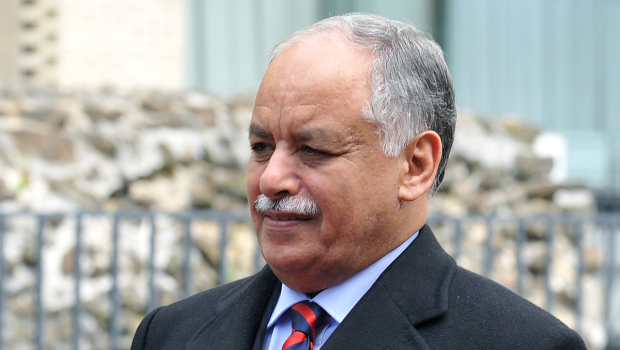
Mahmoud al-Baghdadi extradited to Libya

In a public display of the lack of solidarity among Tunisia's three most senior of officials of state, Libya's 70 year-old former prime minister Dr Mahmoud al-Baghdadi was extradited to Tripoli on 25 June. This occurred despite apparent differences of opinion within the Tunisian political hierarchy on the legality and humanity of his enforced return.

The moderate Islamist-dominated government - led by Prime Minister Hamadi Jebali who is also Ennahda's secretary-general - took and carried out the decision without informing the left-wing secular and largely ceremonial president Moncef Marzouki.

Regional and international human rights organisations have been uncomfortable with the internal bargaining games being played in this arena. Al-Baghdadi, who has been under arrest since he illegally entered Tunisia in August 2011, represents an important family in western Libya, including groups such as the Nuail. He served his medical studentship partly in the UK and was really only a political light-weight during the latter part of the Qadhafi era. Besides seeking vengeance against all Qadhafi regime officials, however, he is also wanted because it is believed he can reveal the regime's secrets.

For more news and expert analysis about Libya, please see Libya Focus and Libya Politics & Security.

© 2012 Menas Associates

Morocco: Public expression of social tensions


There have been further clashes between police and demonstrators in the port city of Mohamedia and in the countryside near Larache. On 16 June, in Mohamedia, east of Casablanca and site of the SAMIR refinery, residents of a shanty town demonstrated in front of the Prefect's Office and clashed with police preventing them from entering the building. Twenty demonstrators and six police were reported hurt.

In a rural area close to the port of Larache, south of Tangiers, there was violence between villagers and police. Media coverage was limited. Residents of the village of Chlihate had blocked the farm machinery of a Spanish agricultural company, Ribera del Arroz, which farms 4,500 hectares in the region, cultivating mainly rice. Feelings had been running high over difficult access to grazing land, the mosquito problem arising since the company switched the land to rice, and its failure to deliver jobs for locals. Negotiations between the local authority and the company since April had failed to produce any tangible results.

(Locals had demanded a barrier plantation of sugar-cane to reduce the mosquito problem.)

With the rice-planting season approaching, villagers decided to occupy the land. On 14 June, there were clashes between the demonstrators and the Gendarmerie. On 16 June, the heavily-armed police arrived, using tear gas and rubber bullets to disperse the demonstrators. Police broke into houses, terrorising inhabitants and stealing property. The village's one shop was destroyed. On 17 June, Chlihate was encircled by militarised police and roads cut off. Water cannons were used on the villagers, wounding women and children. Many young men fled to the nearby woods.

On Wednesday 20 June, a solidarity mission composed of human rights activists was able to reach the village and talk to the terrorised inhabitants. Details of the human rights violations remain to be drawn up but there is good reason to believe that they are serious. In addition, pressure was placed on residents of surrounding settlements to refuse help to those fleeing Chlihate. The opposition PAM (Parti de l'authenticité et de la modernité) placed responsibility squarely on the shoulders of the authorities.

For more news and expert analysis about Morocco, please see Morocco Politics & Security.

© 2012 Menas Associates
Wednesday, 27 June 2012

Iraq: Ninevah seeks own deal


Tensions between Erbil and Baghdad over the energy issue were stoked further this month when Ninevah waded into the heart of the battle. The head of the Ninevah governorate council, Atheel Al-Najayfi , a member of Iraqiya and brother of the head of parliament, Osama Najayfi , put the cat among the pigeons when he declared that he was in support of ExxonMobil 's Kurdish deal. It was also alleged that Al-Najayfi had struck his own deal with the Kurds, in which he had agreed to hand over 10km 2 of land from the governorate, comprising the oil-rich areas of Sheikhan and Quosh, so that the area could be included in the ExxonMobil deal.

It later emerged that such allegations were somewhat overplayed. Al-Najayfi admitted that his discussions with the KRG were still in their early stages and had not got as far as striking any deal. He told the local media, “We never discussed the reality of these contracts with the KRG… We were just in the initial stages. The second stage would be to go through legal bodies.”

However, it also emerged that Al-Najayfi had got as far as establishing and heading a factfinding mission and that he had contacted the US embassy in Baghdad to ask for its help in contacting ExxonMobil. When the embassy declined to contact the oil major on the mission's behalf, it asserted that it would find other ways to get in touch with the oil giant.

Atheel's request was a totally unexpected move from the Sunni camp. Given the tensions between the Sunnis and the Kurds in the area, it seems almost inconceivable that Atheel would have made such an overture to the KRG. However, his doing so was his way of sending a clear message to Baghdad: the government has failed to invest enough in Ninevah and thus the governorate wants greater control over its own resources. Atheel complained that the governorate has been marginalised and that it has had no say in the contracts signed for blocks in the region so far.

Furthermore, the move should be considered within the context of the political crisis that has enveloped the country. This was Atheel Al- Najayfi's way of taking a pot shot at Prime Minister Nouri Al-Maliki . As he told the Al-Sharq Al-Awsat newspaper after the news broke, “Until now we are not party to the contract but I am saying that we have to negotiate with our brothers in the KRG and the American company to guarantee our governorate rights and the governorate council needs to give its authorisation to enter into discussions.” He also declared, “Ninevah must be engaged in oil investments and not away from them, whether through contracts that the KRG has signed or that the central government has signed. We need oil and electricity.”

For more news and expert analysis about Iraq, please see Iraq Focus.

© 2012 Menas Associates

Ghana: Prospects for a regional war are heating up

The bombing of a military column thought to be linked to Al Qa'ida in the Islamic Maghreb (AQIM) has raised the stakes in what is quickly becoming an undeclared regional war in northern Mali and the wider Sahel region. We understand that a Mauritanian aircraft was involved in the bombing raid and that it was working in close collaboration with US and French forces in the region.

Although the regional organisation – the Economic Commission for West Africa States (ECOWAS) – has expressed the will to mount a military force to confront the separatist rebel forces in northern Mali, the planning is still at an early stage. Despite Burkina Faso taking on an ambitious brief to negotiate with the Tuareg separatists, there is no clear political track to the ECOWAS intervention strategy.

Any intensification of this war will unavoidably affect Ghana. President John Atta Mills' government is under pressure to take a more pro-active role in the crisis, given that the other two big states in the region – Nigeria and Côte d'Ivoire – have their own internal crises to deal with. Ghana would be expected to commit a substantial military force to any expeditionary operation but it is unclear how this would be funded. Internal finance is extremely limited currently.

A wider war in Mali could – but is currently unlikely to - create another regional refugee crisis, and Ghana has the reputation for being a favoured destination. At the least, Mali's deepening crisis will put economic pressures on Ghana's military and test its capacity to absorb more refugees. Much less clear are the political implications for Ghana's own northern region if the government should engage in this growing regional confrontation.

For more news and expert analysis about Ghana, please see Ghana Politics & Security.

© 2012 Menas Associates

Tuesday, 26 June 2012

Cameroon awards first oil licence on Bakassi


On 15 June, the government-managed National Hydrocarbons Corporation (SNH) awarded its first petroleum exploration contract on the previously contested Bakassi peninsula. The production-sharing contract for Bakassi West was awarded to a consortium led by Dana Petroleum (a subsidiary of the Korean National Oil Company), which heads a consortium of four firms.

The four-year agreement, worth US$31 million and could be extended by a further two-year period to increase to the tune of US$71 million, will be operated by Dana, with equity interests held by Canada's Madison Petrogas and Cameroon's Soft Oil & Gas Ltd.

The ceremony was overseen by Cameroon's Minister of Mines, Industry and Technological Development Emmanuel Bonde, while the accord was signed for Cameroon by the Executive Manager of SNH Adolphe Moudiki and Dana's country manager John William Downey.

The contract authorises the consortium to acquire, process and interpret seismic 2D data and the drilling of two exploration wells.

Thought to be rich in oil, Bakassi was under Nigerian control for at least 15 years until 2008, when the peninsula was returned to Cameroon following an October 2002 ruling by the International Court of Justice. Although Nigeria has accepted the ruling, the area has faced pockets of resistance from armed splinter groups undermining Cameroon's authority there.

The groups have severally captured Cameroon troops and foreigners operating in Bakassi, urging Cameroon and governments of the captives to pay ransom. In 2010, Cameroon fortified the area with the anti-terrorist Rapid Intervention Battalion, causing a reduction in the groups' activities. Operating under the moniker Bakassi Freedom Fighters (BFF), the groups have not been entirely deterred, however, and made their last attack in October 2011, killing two Cameroonian soldiers.

For more news and expert analysis about Cameroo, please see Cameroon Politics & Security.

© 2012 Menas Associates