Showing posts with label Mahmoud Al-Baghdadi. Show all posts

Thursday, 28 June 2012

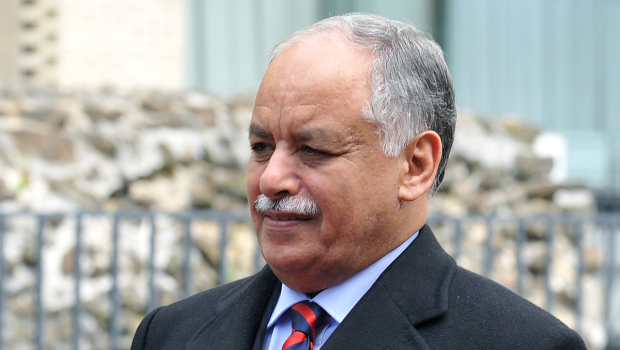
Mahmoud al-Baghdadi extradited to Libya

In a public display of the lack of solidarity among Tunisia's three most senior of officials of state, Libya's 70 year-old former prime minister Dr Mahmoud al-Baghdadi was extradited to Tripoli on 25 June. This occurred despite apparent differences of opinion within the Tunisian political hierarchy on the legality and humanity of his enforced return.

The moderate Islamist-dominated government - led by Prime Minister Hamadi Jebali who is also Ennahda's secretary-general - took and carried out the decision without informing the left-wing secular and largely ceremonial president Moncef Marzouki.

Regional and international human rights organisations have been uncomfortable with the internal bargaining games being played in this arena. Al-Baghdadi, who has been under arrest since he illegally entered Tunisia in August 2011, represents an important family in western Libya, including groups such as the Nuail. He served his medical studentship partly in the UK and was really only a political light-weight during the latter part of the Qadhafi era. Besides seeking vengeance against all Qadhafi regime officials, however, he is also wanted because it is believed he can reveal the regime's secrets.

For more news and expert analysis about Libya, please see Libya Focus and Libya Politics & Security.

© 2012 Menas Associates

Wednesday, 12 January 2011

Libyan government is taking steps to enhance employment


The Libyan government is taking steps to enhance its employment factor to obviate the root causes of dissent which affect other North African regimes. Prime Minister Mahmoud al-Baghdadi has made specific proposals for the banks to deploy their capital in small businesses. It is argued that the talents of senior staff would be better rewarded in this activity rather than remaining in government employment. This and other would-be innovative policies will have no short-term effect but would place the Libyan economy in the right direction for the longer term.

The measures of economic improvement, especially in living standards, have been reinforced by the high level of government spending. In the 2008-12 period, allocations for development total around US$117 billion. So far, US$113 billion has reportedly been spent, of which US$59,700 million has apparently gone to fund housing developments. These accumulated additions to economic growth will play a major role in dampening any dissent which could arise from dissatisfaction over pay rates which have tended to stagnate.

The government has taken some time to develop its appreciation of the dangers of consumer price inflation, caused by the mis-match of supply and demand in a distorted market. Its preferred solution appears to be a moderate attempt to contain demand while also still providing expensive subsidies on staple goods and foodstuffs. So far, the change of policies has been comparatively successful.

The economic news appear to indicate that some real gains are being made in the living standards of a substantial number of Libyans, and especially those in Tripoli or other areas benefiting from large-scale government investment. The government obviously has in mind a bimodal growth strategy, with the larger industries operating as efficiently as possible within the global context while smaller industries, with protected industry status, provide both an appreciable area of job creation opportunities as well as being a useful input of added value.

For more news and expert analysis about Libya, please see Libya Focus and Libya Politics & Security.

© 2010 Menas Associates

Thursday, 25 November 2010

Libya and Ukraine sign co-operation agreements


The joined committee of Libya and Ukraine have signed several agreements to strengthen bilateral co-operation between the two countries. The Secretary of the Libyan General People's Committee Mahmoud al-Baghdadi and Ukraine's Prime Minister Mykola Azarov commended the outcome of the meeting.

The first agreement signed stipulated greater co-operation in the areas of commerce, industry and agriculture. The second agreement covered an MoU between the Libyan Press Agency (JANA) and the Ukrainian News Agency (Ukrania New Form) stipulating greater collaboration in exchange of information and staff training. The nature of the third agreement is unclear, but it is believed to be a draft agreement for the cancellation of visas regarding diplomatic relations between the two countries.

Speaking to the press, shortly after the signing ceremony, both officials commended the new agreements. Baghdadi said Libya and Ukraine have a long history of co-operation in a diverse range of areas including, health, education, military and nuclear power. He added that Ukraine will participate in development projects currently underway in Libya, particularly in the country's infrastructure and subway construction.

Azarov said that the new co-operation agreements are a milestone in the relations between the two countries, and expressed great optimism for the future.

Source: Afrique en ligne

For more news and expert analysis about Libya, please see Libya Focus and Libya Politics & Security.

Tuesday, 9 November 2010

Libya to invest in Tunisia's Skhira refinery


Libya has said that it will help its neighbour Tunisia build a new oil refinery at the Skhira oil terminal, on the Tunisian coastline. The co-operation agreement was at the centre of discussions during Libya's Secretary of General People's Committee Mahmoud Al-Baghdadi visit with Tunisia's President Zine al-Abidine Ben Ali.

Al-Mahmoudi said that both parties had agree that Libya invest in the project and help build the refinery at Skhira, a Mediterranean port about 350km south-east of Tunis. No details about the co-operation agreement have yet been disclosed and it is unclear what role Libya would play in the project, or the size of its investment.

The Skhira refinery project was announced three years ago but it is yet to commence. The refinery is expected to have capacity of around 120,000 b/d. Tunisia has only one oil refinery, in the northern city of Bizerte, with a capacity of 30,000barrels b/d.

Source: Africa News

For more news and expert analysis about Libya, please see Libya Focus and Libya Politics & Security.