Wednesday, 22 May 2013

Mauritania: Presidential majority agrees to aspects of Boulkheir initiative

 
A delegation of the Coalition of the Presidential Majority (CPM) met Messaoud Ould Boulkheir, President of the National Assembly and the People's Progressive Party Alliance (PPA), at his home on the evening of 9 May to give him their response in writing to his initiative to end the country's political crisis.
 
The delegation was led by Sheikh Ould Ethmane Ould Abou El Maaly, who holds the rotating presidency of the CPM. He was accompanied by:

Mohamed Mahmoud Ould Mohamed Lemine, President of the ruling UPR party;
Naha Mint Hamdi Ould Mouknass, President of the UDP;
Mintata Mint Hedeit, secretary general of RDRP;
Isselmou Ould Moustapha, President of the PCD; and
Lalla Mint Chriv, President of the (burst of) Youth Party.
 
The CPM's response was said to be broadly favourable and well disposed towards the initiative. A source close to Messaoud Boulkheir said that it was an “acceptable” answer. The consensus among the media reports is that the CPM is clearly willing to engage in dialogue with other parties on all the issues raised by Boulkheir's initiative, with the exception of forming a government of national unity, as long as they conformed to the country's constitution. Most reports described the CPM's response as being “flexible” and “positive”.

For more news and expert analysis about Mauritania, please see Mauritania Politics & Security.

© 2013 Menas Associates

Monday, 20 May 2013

Algeria is modernising its military

 
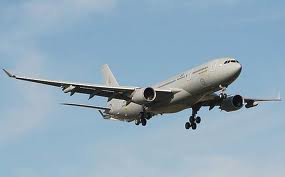
The Algerian Air Force has evaluated Airbus Military's A330 Multi-Role Tanker Transport (MRTT) and unconfirmed reports indicate that it will probably purchase three aircrafts. According to Aviation Week & Space Technology, an A330 MRTT destined for the UK's Royal Air Force conducted trials at the Algerian Air Force's Boufarik military transport base near Blida in early May.
 
The demonstration was requested by the Algerian government, which means the likelihood of a sale is high. The A330 MRTT is based on the commercial A330-200 passenger jet and is able to carry up to 111 tonnes of fuel in its wings. It can be used as a pure transport aircraft able to carry up to 300 troops, or a payload of up to 45 tonnes. It can also be converted to accommodate up to 130 stretchers for Medical Evacuation (MEDEVAC) missions.
 
Algeria is modernising its military and seems to be replacing some of its older Russian equipment. It operates several Ilyushin Il-78 Midas aerial refuelling tankers. According to the Secret Difa3 blog, Boeing demonstrated a C-17 to the Algerian Air Force at the Tamanrasset test centre on 22 April. It was reportedly flown from the US Air Force's 446th Airlift Wing at McChord Air Force Base in Washington. Algeria is apparently looking to order 6-8 Globemaster IIIs but this cannot be confirmed.
 
For more news and expert analysis about Algeria, please see Algeria Focus and Algeria Politics & Security.
 
© 2013 Menas Associates

Thursday, 16 May 2013

Libya: Western concern

 
Even if the explosion was an accident, the blast is yet another indication of the chaos and insecurity that is gripping the country. Libya seems to be gradually unravelling, as the extent of the government's lack of power is becoming increasingly apparent. Recent events have shown all the more clearly that the central authorities are almost completely impotent in the face of other localised powers that plainly have their own very different agendas.

The situation is certainly deemed serious enough for the US to prepare itself for the worst. Pentagon spokesman George Little announced this week that it had transferred 500 US marines from Spain to the NATO base at Sigonella in Sicily to be ready for rapid deployment if necessary.

Meanwhile, the US State Department announced this week that it had ordered the departure of a number of non-essential staff from Tripoli. State Department spokesperson, Patrick Ventrell, declared, “In light of the current unsettled conditions around major anti-government demonstrations in Tripoli, the under-secretary for management has approved the ordered departure of non-emergency personnel from Libya."

The British Embassy similarly pulled out a number of its staff on a temporary basis. The British Council also decided to close its office until the situation stabilised.

All this bodes very badly for Libya and its efforts to put the country back on a normal footing.

For more news and expert analysis about Libya, please see Libya Focusand Libya Politics & Security.

© 2013 Menas Associates
Ghana: Supreme Court calls in KPMG to audit the pink sheets

 
The Supreme Court has called in KPMG to audit the pink sheets tendered as evidence of the alleged irregularities in the December 2012 presidential elections.
 
The court, presided over by Justice William Atuguba, took the decision after a disagreement between the opposition New Patriotic Party (NPP) petitioners and the ruling National Democratic Congress (NDC) respondents over the number of pink sheets submitted as exhibits in the case (see Comment and Analysis).
 
The court also decided that two representatives from each of the two parties to the suit should assist in the counting of the pink sheets, while the parties are also required to pay KPMG's bill.
Last week, NDC lead counsel Tsatsu Tsikata insisted on a physical count of pink sheet exhibits sworn in affidavits by the NPP.
 
Continuing his cross-examination of NPP witness and former vice presidential candidate, Dr Mahamudu Bawumia, Tsikata insisted that the petitioners had initially submitted 8,621 pink sheets displaying alleged irregularities, omissions and malpractices, and not the 11,842 stated in the affidavit filed by the petitioners, nor the 11,916 pink sheets declared in the second amended petition.
He also said that an examination of pink sheet exhibits served his clients by the petitioners revealed that 115 of the 8,621 contained no relevant data, and a further 373 pink sheets were duplicated.
 
Support for the audit came from the respondents in the case: President John Mahama's lead counsel Tony Lithur; lead counsel for the petitioners Philip Addison; and James Quarshie-Idun who is lead counsel for the Electoral Commission.
 
For more news and expert analysis about Ghana, please see Ghana Politics & Security.
 
© 2013 Menas Associates

Tuesday, 14 May 2013

BP and British Embassy pull staff as bombing hits Benghazi


The FCO and BP have both withdrawn staff from their operations in Libya in the last week, in response to uncertainty regarding the North African country's political and security situation. The British Embassy in Tripoli on Friday 10 May 2013 announced that a “small number” of staff who work in the Libyan ministries were being repatriated. Following the Embassy's example, and heeding advice given to them by the FCO, BP also announced that it was withdrawing a “small number” of non-essential staff as a “precautionary measure”.
 
The announcements come amid growing tensions in Libya. In recent weeks, a number of militias have besieged the foreign and justice ministries in the capital, seeking to ensure the Political Exclusion Law, an act preventing previous members of Qadhafi's government from taking office, is passed. Wanting a clean start to politics in post-revolutionary Libya, the rebels desire political office removed of the contemporaries of the man they fought to oust, however, the Law's opponents argue that these isolation provisions will deprive the country of substantial political and administrative know-how.
 
There have also been several bombings of police stations, the French Embassy and, most recently, of a hospital in Benghazi, one of a string of attacks in the eastern city. The car bomb struck the Jalaa hospital on 13 May 2013, killing nine and injuring dozens. It is the first such attack against civilian target, such as a hospital, in recent memory.
 
In January 2011, BP evacuated more than 400 staff from numerous locations inside Libya in response to the uprising that ousted Qadhafi from power. Despite this action, BP's largely offshore operations were mostly unaffected. At the same time, the British Embassy also evacuated its staff for two months.
 
For more news and expert analysis about Libya, please see Libya Focusand Libya Politics & Security.
 
© 2013 Menas Associates

Monday, 13 May 2013

Suriname: Government decides not to take loans from local banks

 
Following the advice of the Governor Gillmore Hoefdraad of the Central Bank of Suriname (CBvS), the government has decided not to take loans from local banks. The money would be used to pay for contracted works.
 
Mrs Djaienti Hindori, the president of the Surinamese Association of Bankers, says that even if a loan would be asked, it would be a regular pre-financing method. That is why all banks separately declared their willingness to cooperate whenever the government would have the intention to give out bonds. “But the government still has enough other legally approved possibilities to pre-finance its expenditures,” the banker says. “The total national and international loan ceiling has not yet been reached. Legally there is still a lot of room for the government,” says Mrs. Hindori. She further comments that in each country it can happen that there is a miss-balance between income and expenditures.
 
“Our country is not an exception. The president of the Association of Bankers however warns the administration and advises to put a good cash management policy in place. Also it should very well be controlled that all projects are being executed within the fixed budget and within a determined period of time. “The executing ministries should also make good arrangements with the Ministry of Finance regarding the timing of the contracts and the subsequent payments. Excessive consumptive expenditures should be limited to a minimum,” says Hindori.
 
For more news and expert analysis about Suriname, please see Suriname Politics & Security.
 
© 2013 Menas Associates

Friday, 10 May 2013

Morocco: Al Adl leader publicly criticises the monarchy from abroad

 
In Algiers, leading a delegation to the conference of Algerian Islamist party Mouvement de la société pour la paix (MSP), Mohamed Abbadi, Abdeslam Yassine's successor at the head of Al Adl wal Ihsane (Justice and Good Works) movement made a strategic move unlikely to win him much popularity with the Moroccan authorities. Interviewed by the conservative Algerian daily Echourouk, he declared that “power in Islam is based on shura (consultation) and not on heredity … We suffer from the monarchy, and, progressively, if God wishes, we will get rid of it and return to what the Qur'an says”. Abbadi has already made remarks with this content and tone to the media. The difference this time is that it was an Algerian newspaper that published them under the title “We suffer from the monarchy … and wish to see it disappear.”

Al Adl refuses to recognise the Moroccan sovereign's right to the title 'Commander of the Believers', and in turn the Moroccan State refuses to recognise Al Adl. Abbadi's line is that only by strict respect of the principles which prevailed in the earliest Islamic community can the lost power of the Muslim nation or Umma be restored. (The restoration of lost Islamic glories is a recurrent theme in Islamist discourse.) Although Abbadi advocates party politics, his movement has shown no readiness to make concessions to the Palace in order to move into political life. In the interview, he declared: “We do not wish to get into a swamp from which we would not be able to get out. Anyone who gets into such a sector, or rather marsh, is obliged to make concessions at the expense of their Islamic principles. We are not prepared to do this” – unlike the ruling Islamo-democrats of the PJD, he might have added. For the record, on Saturday 4 May, Abderrezak Mokri was elected leader of the MSP.

For more news and expert analysis about Morocco, please see Morocco Politics & Security.

© 2013 Menas Associates